Opening Chapter One of the Classic of Tea is short, but it handles botany, soil, picking, processing, medicine and character at once. It is not an introduction to be waved away w
200replies
Opening Chapter One of the Classic of Tea is short, but it handles botany, soil, picking, processing, medicine and character at once. It is not an introduction to be waved away w
Photo: Wikimedia Commons.jpg) · CC BY 4.0 Thesis Keeping Chapter One on a shelf turns it into cultural performance. A more useful reading breaks it into practical judgment
Photo: Wikimedia Commons.jpg) · CC BY 4.0 Thesis Translating 嘉木 as fine tree, noble tree or excellent tree each loses something. “Fine” leans on quality, “noble” on social
Photo: Wikimedia Commons.jpg) · CC BY 4.0 Thesis The ten chapters are not parallel encyclopedia entries. Chapter One defines the object; Chapters Two and Three cover picki
Photo: Wikimedia Commons.jpg) · CC BY 4.0 Thesis Chapter One speaks of tea trees in the Bashan gorges so thick that two men could barely encircle them; people cut the boug
Photo: Wikimedia Commons.jpg) · CC BY 4.0 Thesis After describing tea's benefits, Chapter One suddenly says “tea can be a burden”. This is not a rejection of tea. It is a
Photo: Wikimedia Commons.jpg) · CC BY 4.0 Thesis “Picked out of season, made without care, mixed with weeds — drinking it causes illness.” Lu Yu divides quality failure in
Photo: Wikimedia Commons.jpg) · CC BY 4.0 Thesis Chapter One compares tea to ginseng: the best comes from Shangdang, then Baekje and Silla, then Goguryeo; material from Ze
Photo: Wikimedia Commons.jpg) · CC BY 4.0 Thesis “Tea used as a drink is extremely cold in nature” is the most medical sentence in Chapter One. In Tang materia medica, col
Photo: Wikimedia Commons.jpg) · CC BY 4.0 Thesis Chapter One does not open with a list of uses. It opens with a judgment: tea is a fine tree of the South. The sentence fix
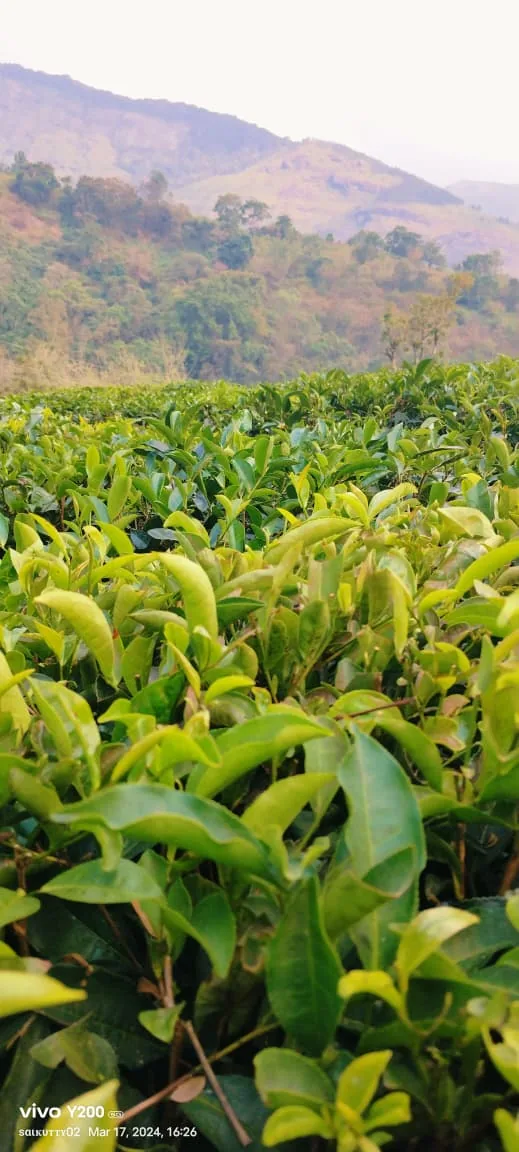
Photo: Wikimedia Commons.jpg) · CC BY 4.0 Thesis The plant description runs: tree like 瓜芦, leaf like gardenia, flower like white rose, fruit like palm, □ like clove, root
Photo: Wikimedia Commons.jpg) · CC BY 4.0 Thesis Huangfu Rui and Yang Tingshuo's study of the old annotation to “其字” argues that the passage on the grass, wood and combine
Photo: Wikimedia Commons.jpg) · CC BY 4.0 Thesis Chapter One lists five names — 茶, 槚, 蔎, 茗, 荈 — and notes that the character may take the grass, wood, or both radicals. Th
Photo: Wikimedia Commons.jpg) · CC BY 4.0 Thesis Purple above green, needle above bud, rolled leaf above open leaf: this is a visual grading system. Purple buds were rare
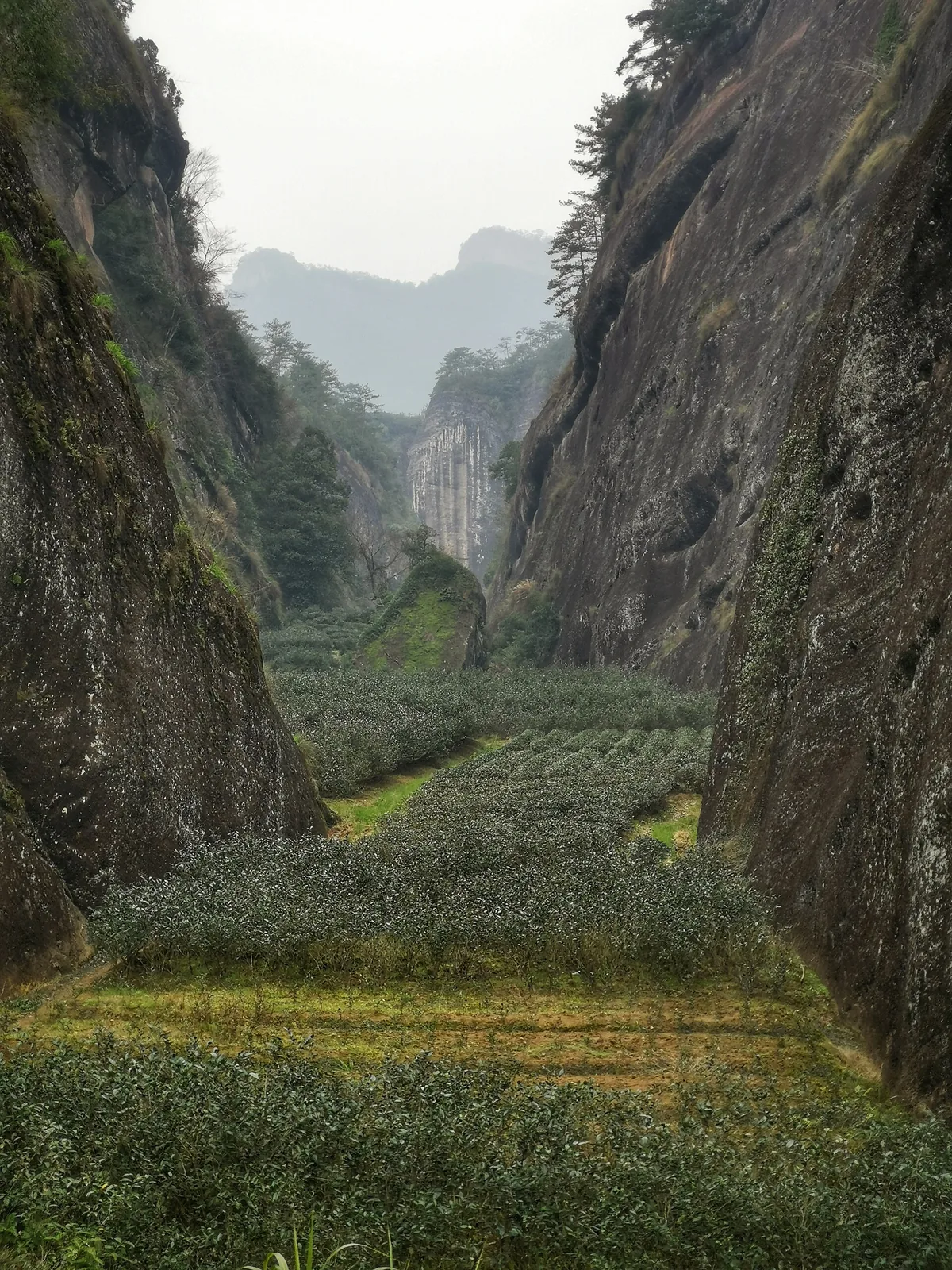
Photo: Wikimedia Commons.jpg) · CC BY 4.0 Thesis “Yang cliffs, yin forests” is usually glossed as a sunny slope with a shaded wood. A more operational reading: tea needs l
Photo: Wikimedia Commons.jpg) · CC BY 4.0 Thesis “Wild is superior, garden is next” is often used to prove that wild tea must beat plantation tea. In context, it is first
Photo: Wikimedia Commons.jpg) · CC BY 4.0 Thesis Chapter One grades soil as 烂石, 砾壤 and 黄土. Chen Wenhua's reading of 烂石 is weathered rock that has broken down into a loose,
Photo: Wikimedia Commons.jpg) · CC BY 4.0 Thesis Wang Xufeng and Wang Yun trace the earliest documentary starting point of Chinese tea virtue to Chapter One: tea is cold i
Photo: Wikimedia Commons.jpg) · CC BY 4.0 Thesis Miao Yuanlang's reading of 精行俭德 turns on the Shuowen definition of 俭 as 约 — to bind, restrain, limit — rather than simple
Photo: Wikimedia Commons · CC0 Thesis The common mistake is to lift “以绢素或四幅或六幅分布写之陈诸座隅则茶之源之” out of its sentence and turn it into an absolute rule. Text "Write it ou