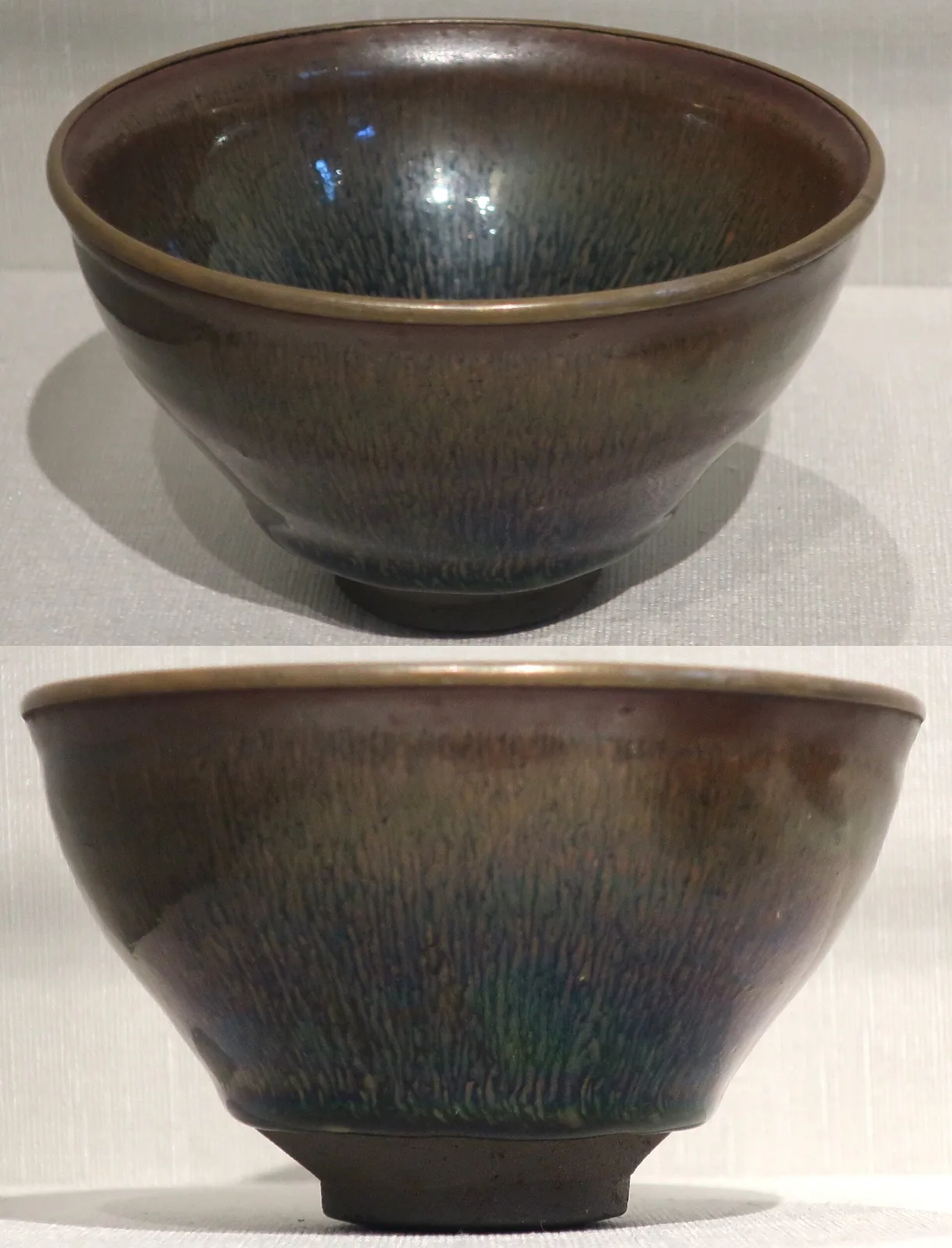
Photo: Wikimedia Commons · CC0

Thesis
The common mistake is to lift “以绢素或四幅或六幅分布写之陈诸座隅则茶之源之” out of its sentence and turn it into an absolute rule.
Text
“Write it out on silk, in four or six panels, and place them by your seat — then the Origin, the Implements, the Making, the Vessels, the Brewing, the Drinking, the History, the Producing Regions, and the Omissions are all kept before your eyes.”
Context
绢素:丝绢。把全书内容分四幅或六幅书写陈设,随时看见,随时牢记。
Evidence
- Collation: "四幅或六幅"各本一致;十篇之中"之图"本为读法而非内容,历代学者认为此章是陆羽提示的"学习法"而非独立茶事。
- Existing readings: 吴觉农指出"十之图"实为全书总结:陆羽建议把九篇内容画成图表悬于座隅,以便"目击而存"——这既是最早的茶学挂图,也暗示《茶经》成书之用心:不只著书,更欲传习。
Analysis
The usual misreading extracts “以绢素或四幅或六幅分布写之陈诸座隅则茶之源之” as a slogan. "四幅或六幅"各本一致;十篇之中"之图"本为读法而非内容,历代学者认为此章是陆羽提示的"学习法"而非独立茶事。 In fact every judgment in the chapter carries a limit of place, season and use.
Conclusion
The section does not give a universal rule. It demonstrates a method: read the text, the annotation and the Tang context together before making a modern claim.
Source: The Classic of Tea, Chapter X · The Illustration, section 1; the original is in the public domain.
When lost, brew a cup first.