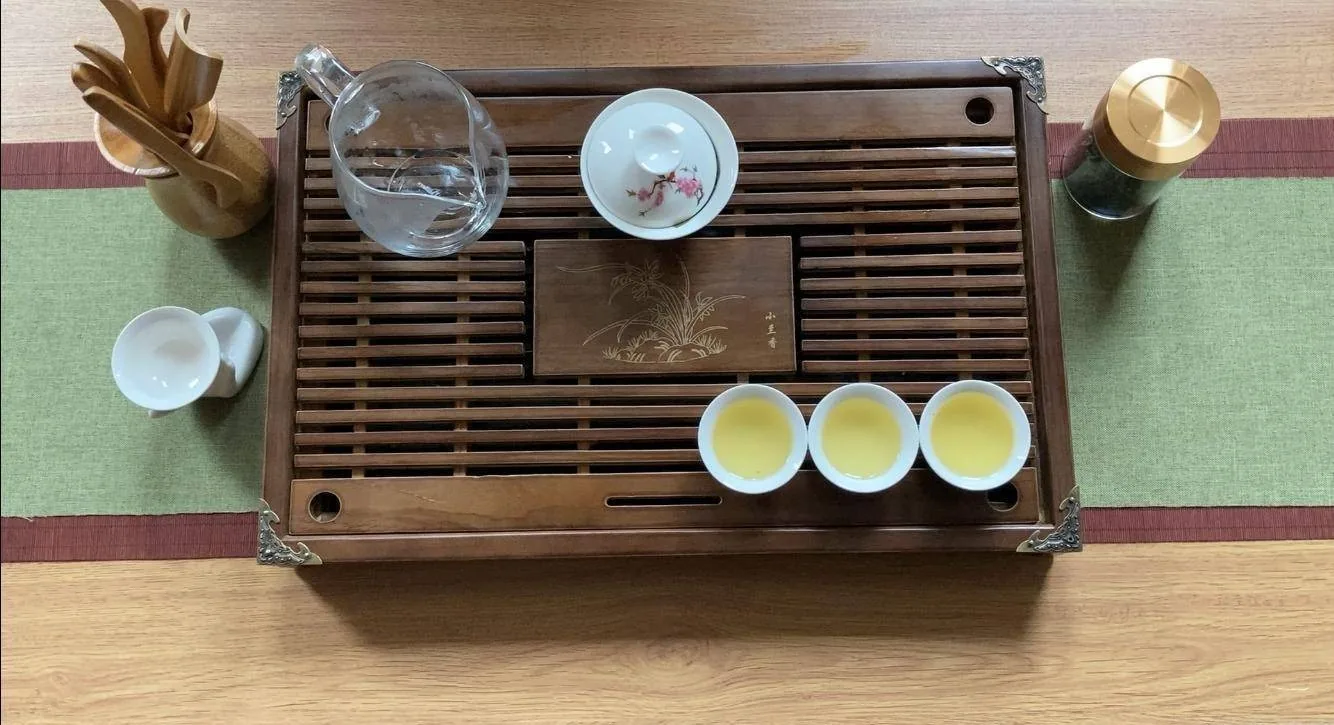
Photo: Wikimedia Commons · CC BY-SA 4.0

Thesis
Section 4 is not really about “酌之以匏酌置于碗内其隽永者煮水一升酌分五碗”; it is about how Lu Yu turns tea from a local product into an object of argument.
Text
“Ladle it with a gourd dipper into the bowls. The finest essence — from one sheng of boiling water, it is divided among five bowls.”
Context
匏(páo):葫芦做的舀勺。隽永:头一锅的精华水。
Evidence
- Collation: “隽永"二字为唐代俗语,指头汤精华,各本一致;有学者认为"隽永"本义为"滋味深长”,此处特指首沸精华。
- Existing readings: 吴觉农释"隽永":头锅汤中浮起的一层精华(今人谓之"茶油/茶沫"),陆羽专门舀出单饮,可见唐代已讲究"分汤"之妙。
Analysis
Formally, the section gives a judgment, adds material detail, then returns to human practice. 匏(páo):葫芦做的舀勺。隽永:头一锅的精华水。 That is why the Classic of Tea reads as an argued book rather than a miscellany.
Conclusion
The section does not give a universal rule. It demonstrates a method: read the text, the annotation and the Tang context together before making a modern claim.
Source: The Classic of Tea, Chapter V · The Brewing, section 4; the original is in the public domain.
Get the character right before the taste.