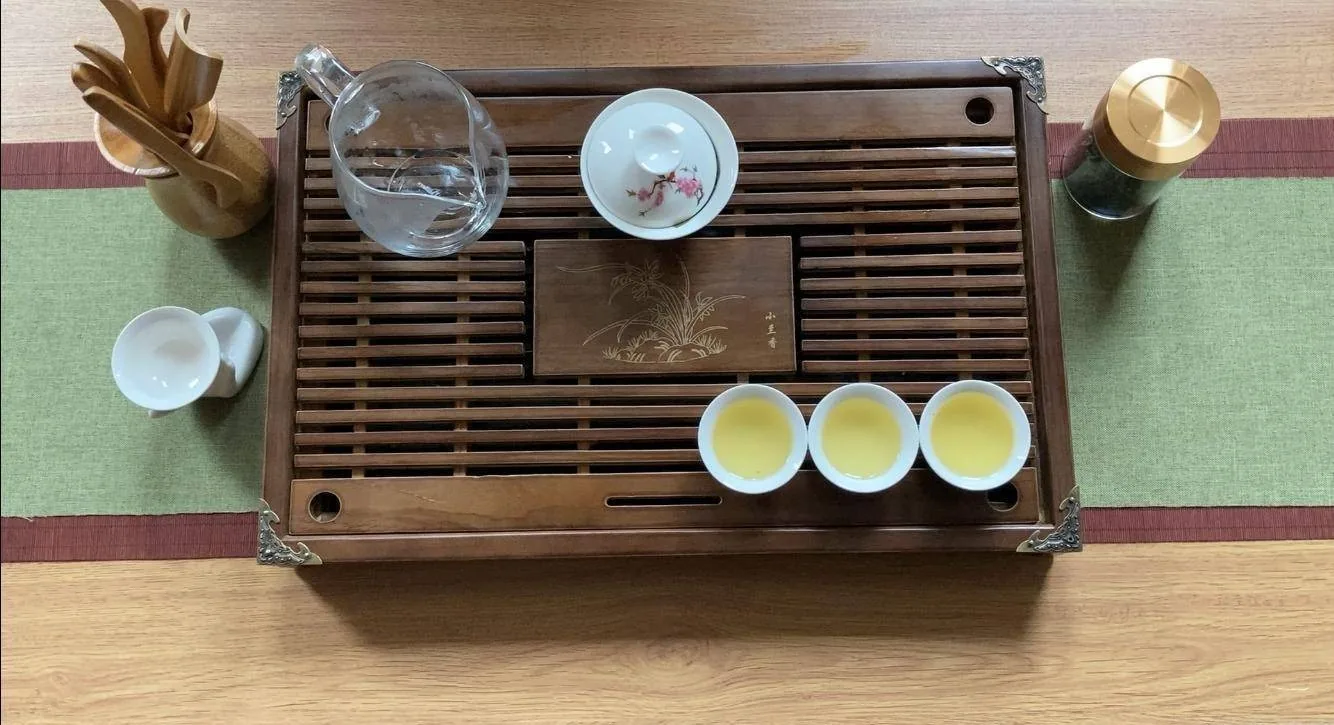
Photo: Wikimedia Commons · CC BY-SA 4.0

Thesis
“其沸如鱼目微有声为一沸缘边如涌泉连珠为二沸腾” still has operational value at a contemporary tea table, provided Tang conditions are not silently universalised.
Text
“When the water first boils — with bubbles like fish eyes and a faint sound — that is the first boil. When bubbles rise along the rim like a linked string of spring pearls, that is the second boil. When it surges and rolls like waves, that is the third boil.”
Context
三沸的辨识:初沸如鱼眼小泡微响;二沸如涌泉连珠沿边翻涌;三沸则大浪翻滚。
Evidence
- Collation: “腾波鼓浪"四库本作"腾波鼓浪”,各本一致;三沸的形容"鱼目"“连珠”"鼓浪"为历代注本反复申说之语。
- Existing readings: 吴觉农评三沸之说"最见经验":一沸为初沸(约80℃),二沸为茶器冲泡最佳,三沸则水老气散。今人"水不可滚太久"的泡茶经验,正是此说的延续。
Analysis
To repeat this section today is not to copy a Tang utensil list. It is to keep its order of judgment: leaf first, then water and fire, then the table.
Conclusion
The section does not give a universal rule. It demonstrates a method: read the text, the annotation and the Tang context together before making a modern claim.
Source: The Classic of Tea, Chapter V · The Brewing, section 2; the original is in the public domain.
Tea is grown and made, not just discussed.