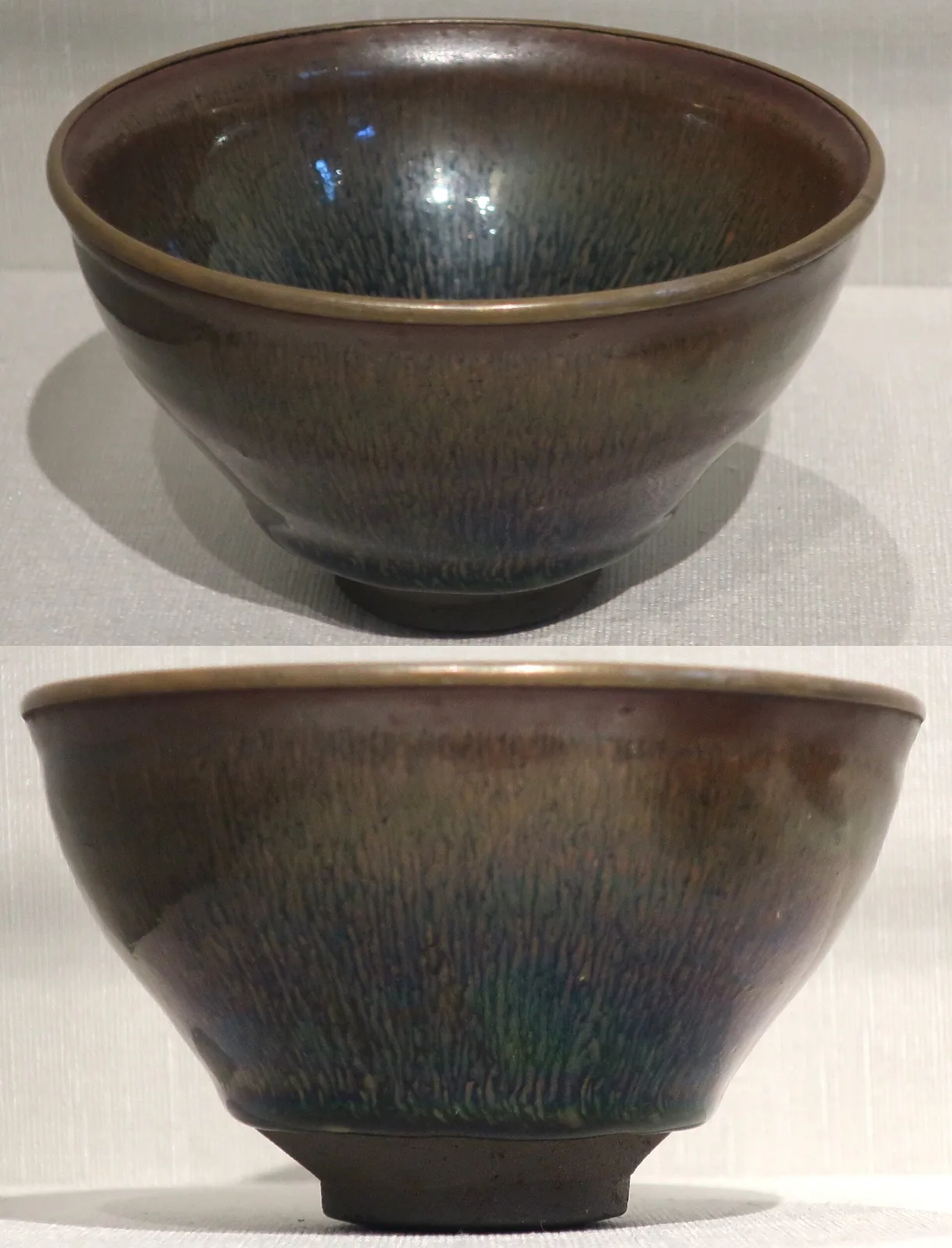
Photo: Wikimedia Commons · CC0

Thesis
Section 3 is not really about “碗越州上鼎州次婺州次岳州上寿州洪州次”; it is about how Lu Yu turns tea from a local product into an object of argument.
Text
“For tea bowls, those of Yuezhou are best, Dingzhou and Wuzhou next; of the Yuezhou type, Yue is finest, then Shouzhou and Hongzhou.”
Context
唐代评瓷碗,越窑青瓷为上。陆羽推"越窑类玉、类冰"。
Evidence
- Collation: 本句版本差异较大:四库本作"碗,越州上,鼎州次,婺州次;岳州上,寿州次,洪州次",与百川学海本略异;"越州上"之断句历代有争,今从通行本。
- Existing readings: 吴觉农释此句:陆羽以"类玉类冰"推崇越窑青瓷,因其釉色青绿,与茶汤相衬更显清澈;其"青瓷胜白瓷"之论,与唐代以"青"为尚的审美一致。
Analysis
Formally, the section gives a judgment, adds material detail, then returns to human practice. 唐代评瓷碗,越窑青瓷为上。陆羽推"越窑类玉、类冰"。 That is why the Classic of Tea reads as an argued book rather than a miscellany.
Conclusion
The section does not give a universal rule. It demonstrates a method: read the text, the annotation and the Tang context together before making a modern claim.
Source: The Classic of Tea, Chapter IV · The Vessels, section 3; the original is in the public domain.
Get the character right before the taste.