Photo: Wikimedia Commons · CC0

Full text
[1] “The wind stove is cast of copper or iron, shaped like an ancient tripod.”
[2] “The fu cauldron is made of raw iron. Its inner mold is clay, so the inside is smooth and easy to scour; its outer mold is sand, so the outside is rough and endures the flame.”
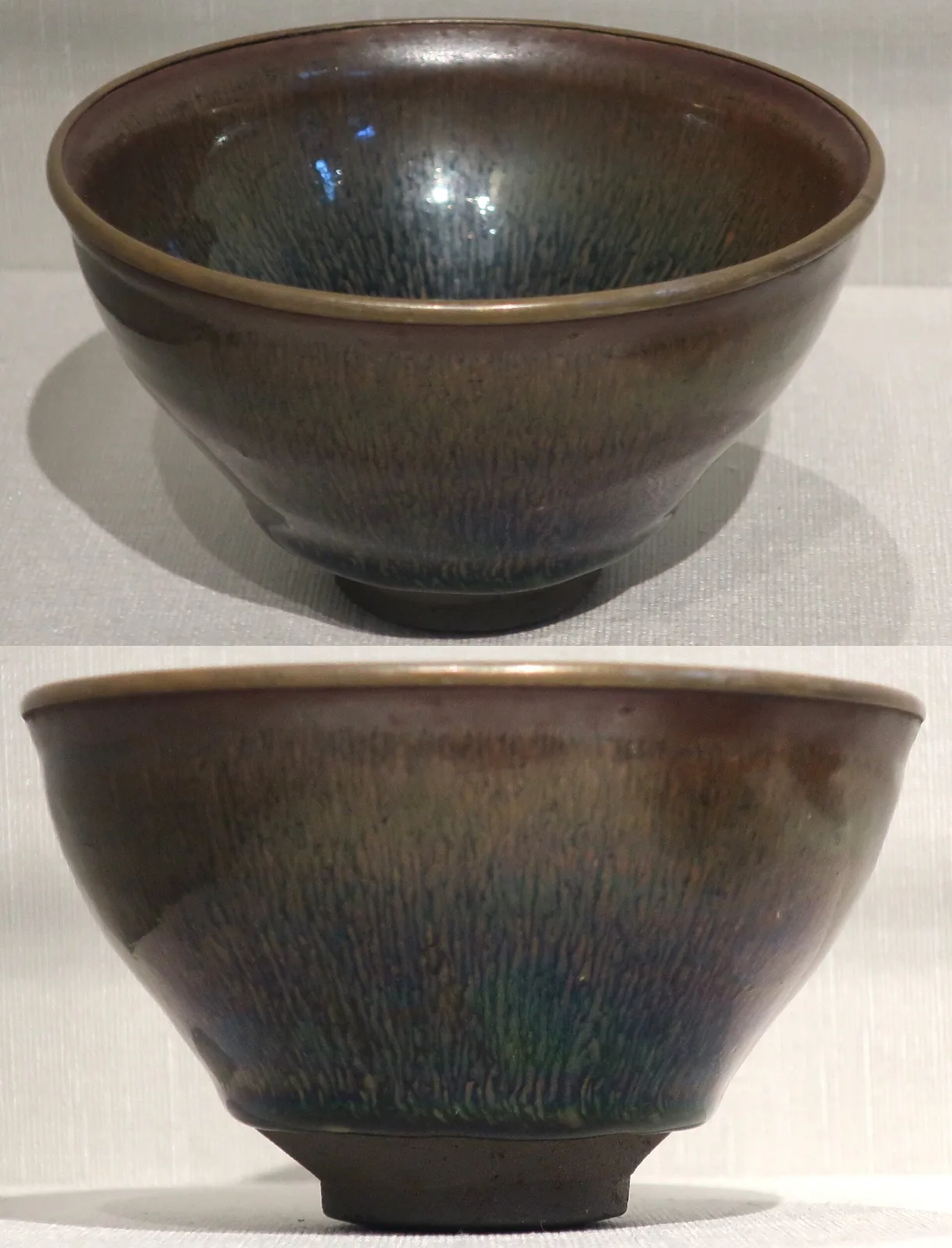
[3] “For tea bowls, those of Yuezhou are best, Dingzhou and Wuzhou next; of the Yuezhou type, Yue is finest, then Shouzhou and Hongzhou.”
[4] “For one sheng of boiling water, use one fangcun-spoon of tea powder. If you like it thin, reduce it; if you crave strength, increase it.”
[5] “For the fire, charcoal is best, and sturdy firewood next. Charcoal that has been used for roasting, stained with fat and rankness, as well as resinous wood and rotten utensils, must not be used.”
[6] “For water, mountain spring is best, river next, well lowest. Of mountain springs, choose the milky fountains that seep from rocky pools; avoid rushing, churning torrents.”
[7] “When it first boils, with fish-eye bubbles and a faint sound, that is the first boil; when the rim seethes like linked pearls, the second; when it surges like waves, the third. Beyond this the water is old and undrinkable.”
[8] “When the water first boils, skim off the film that rises on the surface, like black mica; drinking it spoils the flavor.”
[9] “Ladle it with a gourd into the bowls, so that the foam is evenly divided. The foam — the froth — is the flower of the soup.”
Note
This chapter has 9 sections. The English text above is a working translation for discussion; the Chinese original is in the public domain. Name the edition when quoting, since Chapter One and several other chapters contain variants.
Source: Wikisource