Photo: Wikimedia Commons · CC BY 4.0

Thesis
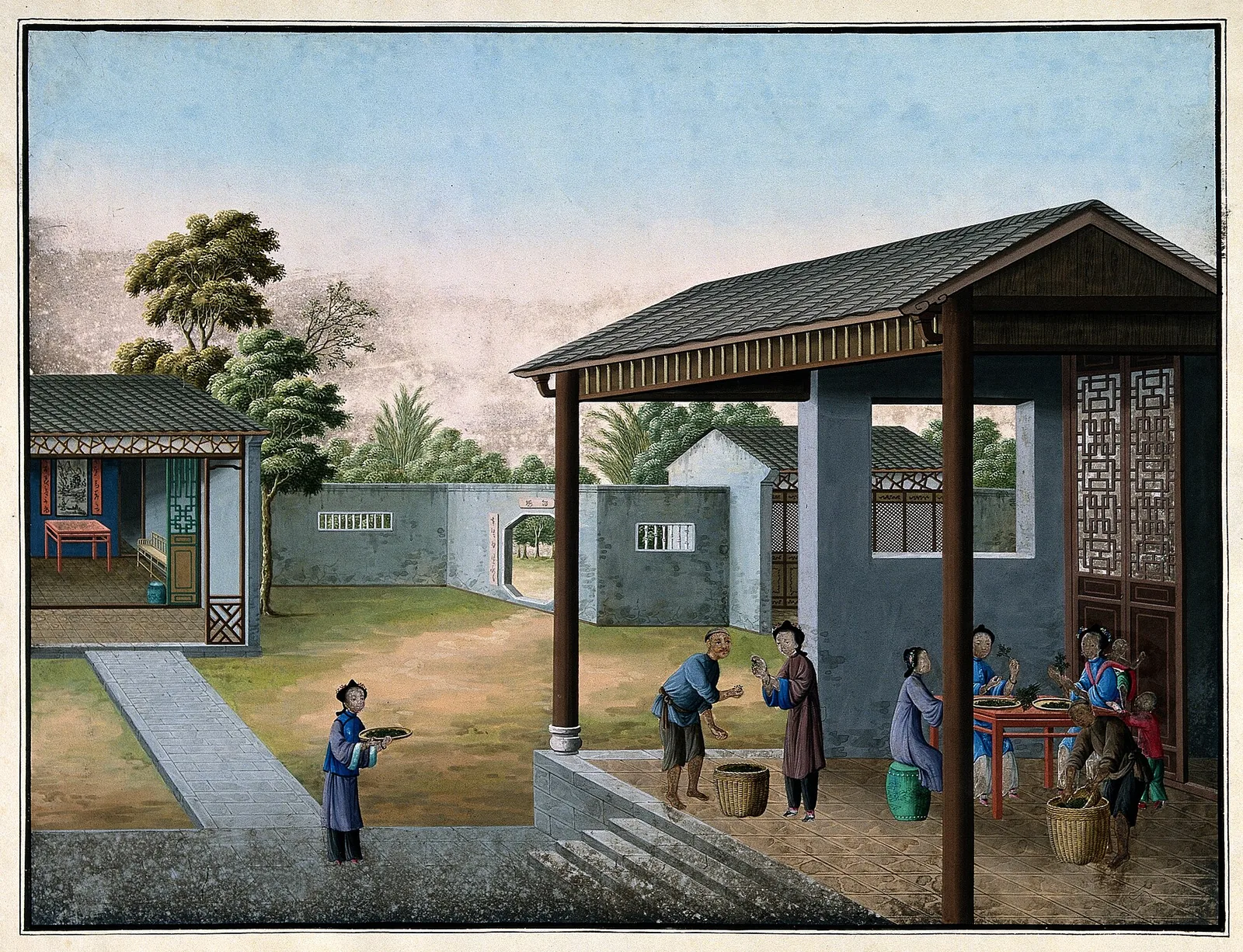
The key words in “凡采茶在二月三月四月之间” are not ornament. They mark where Tang tea names, vessels and provenance meet.
Text
“Tea is gathered in the second, third, and fourth months.”
Context
指农历二至四月,即春茶季。古人认为春茶质最优。
Evidence
- Collation: 各本一致。有学者指出"二月、三月、四月"为农历,对应今公历三月中至五月中,正值各茶区春茶季。
- Existing readings: 吴觉农考证:唐代茶区气候偏暖,农历二三月采茶与今"明前""雨前"观念呼应——陆羽认为春茶质最优,此论开后世"春茶贵"之先河。
Analysis
The annotation matters less as philology than as a distinction between name and thing. 各本一致。有学者指出"二月、三月、四月"为农历,对应今公历三月中至五月中,正值各茶区春茶季。 Once names settle, picking, grading and trade can share a language.
Conclusion
The section does not give a universal rule. It demonstrates a method: read the text, the annotation and the Tang context together before making a modern claim.
Source: The Classic of Tea, Chapter III · The Making, section 1; the original is in the public domain.
Ask what period this person lived in.