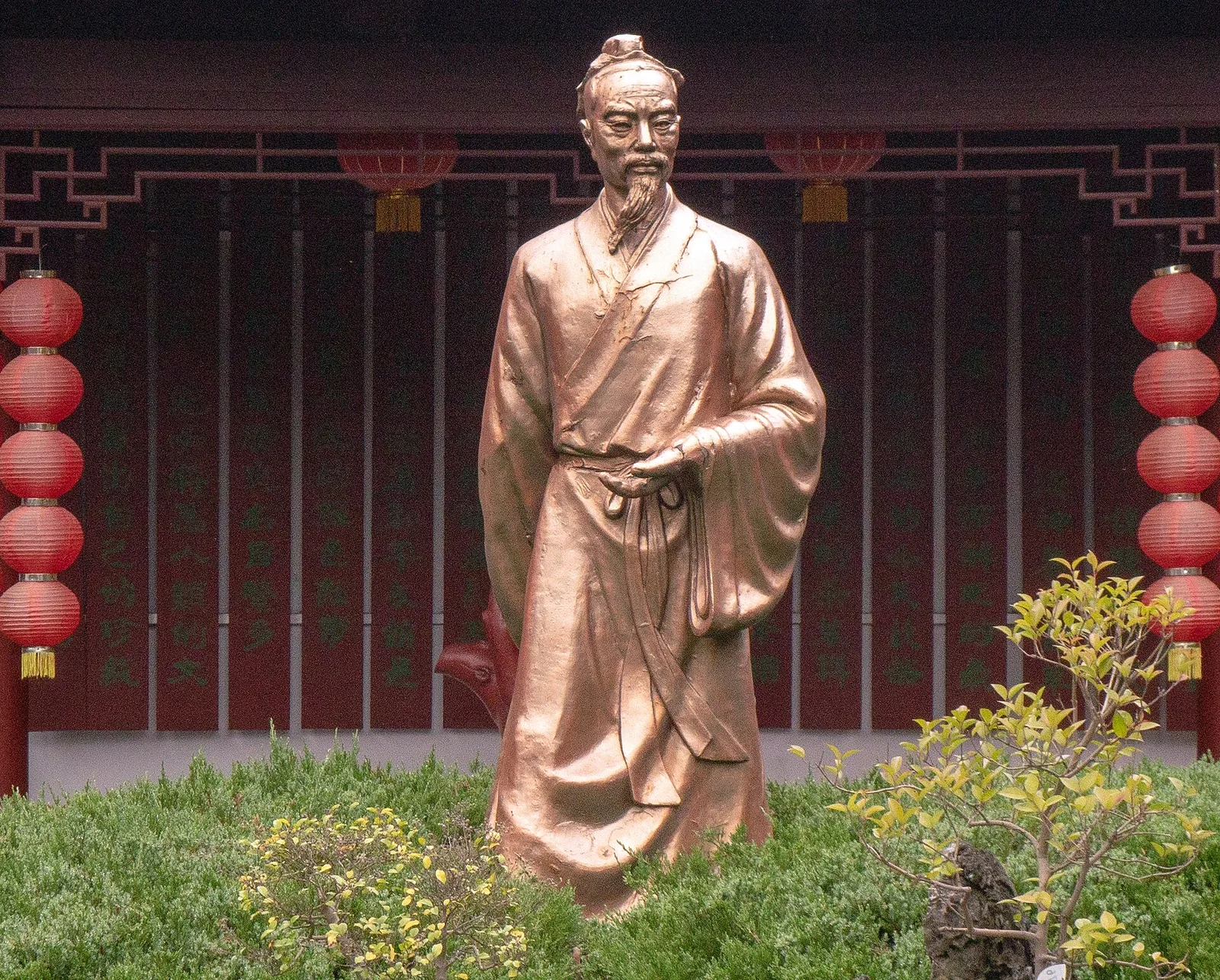
Photo: Wikimedia Commons · CC BY-SA 4.0

Thesis
Section 9 is not really about “《搜神记》夏侯恺因疾死宗人字苟奴察见鬼神见恺”; it is about how Lu Yu turns tea from a local product into an object of argument.
Text
“In the Search for the Supernatural: Xia Houkai died of illness; his kinsman Gou Nu, who could see spirits, watched him come to fetch his horse and afflict his wife. Wearing a flat kerchief and single robe, he entered and sat on the great bed by the west wall where he had sat in life, and asked people for tea.”
Context
《搜神记》:东晋干宝志怪小说。夏侯恺:人名。帻(zé):头巾。
Evidence
- Collation: 各本一致。此条为《茶经》引志怪小说,吴觉农注:可见晋代"人鬼皆嗜茶"的民俗想象。
- Existing readings: 吴觉农指出此条虽是志怪,却透露了重要信息:晋代民间已视茶为日常饮品,甚至死后犹念念不忘——茶的普及程度由此可见一斑。
Analysis
Formally, the section gives a judgment, adds material detail, then returns to human practice. 《搜神记》:东晋干宝志怪小说。夏侯恺:人名。帻(zé):头巾。 That is why the Classic of Tea reads as an argued book rather than a miscellany.
Conclusion
The section does not give a universal rule. It demonstrates a method: read the text, the annotation and the Tang context together before making a modern claim.
Source: The Classic of Tea, Chapter VII · The History, section 9; the original is in the public domain.
Get the character right before the taste.