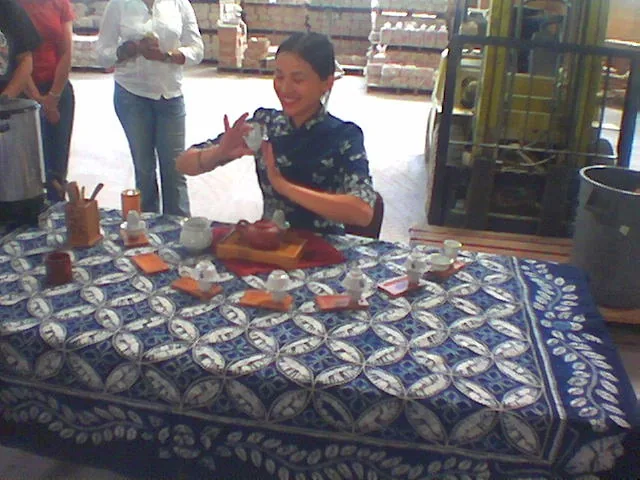
Photo: Wikimedia Commons · CC BY 2.0

Thesis
The key words in “夫珍鲜馥烈者其碗数三次之者碗数五若座客数至五” are not ornament. They mark where Tang tea names, vessels and provenance meet.
Text
“For tea of rare freshness and rich fragrance, pour but three bowls; for that of the second grade, five. With five guests, serve three bowls; with seven, five. With fewer than six, no fixed count is kept — but omit one, and let the finest essence make up his portion.”
Context
珍鲜馥烈:珍贵鲜爽、香气馥郁的好茶。行三碗/五碗:分三碗/五碗。阙一人:少算一人。隽永:头汤精华。
Evidence
- Collation: 此句讲分茶之道,各本一致。吴觉农注:"行三碗行五碗"是按人数分茶的唐代礼数。
- Existing readings: 吴觉农指出唐代分茶"三碗五碗"非拘于量,而在"淡者自得,浓者共赏"——好茶量少而精,次茶量多而匀,是"以茶会友"的雅量,也是分茶礼仪的雏形。
Analysis
The annotation matters less as philology than as a distinction between name and thing. 此句讲分茶之道,各本一致。吴觉农注:"行三碗行五碗"是按人数分茶的唐代礼数。 Once names settle, picking, grading and trade can share a language.
Conclusion
The section does not give a universal rule. It demonstrates a method: read the text, the annotation and the Tang context together before making a modern claim.
Source: The Classic of Tea, Chapter VI · The Drinking, section 8; the original is in the public domain.
Ask what period this person lived in.