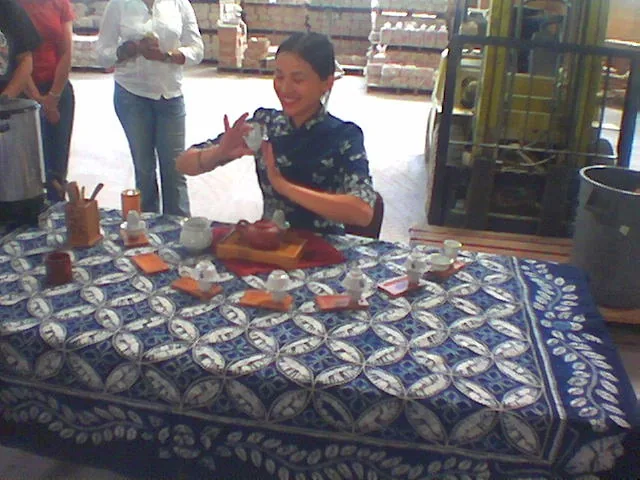
Photo: Wikimedia Commons · CC BY 2.0

Thesis
Read through modern tea science, “阴采夜焙非造也嚼味嗅香非别也膻鼎腥瓯非器也膏” is not a lab result but a set of variables: cultivar, soil, light and plucking standard.
Text
“Gathering in shade and roasting by night is not true making; tasting and sniffing is not true judging; rank-smelling vessels are not true utensils; greasy fuel and kitchen charcoal are not true fire; torrents and stagnant pools are not true water; raw within and scorched without is not true roasting; powder that flies like dust is not true grinding; clumsy hurried stirring is not true brewing; drinking only in summer is not true drinking.”
Context
阴采夜焙:阴天采、夜里焙。嚼味嗅香:靠嚼和闻来辨别。膻鼎腥瓯:沾腥带膻的锅碗。膏薪庖炭:油脂柴、厨房炭。飞湍壅潦:湍急与停滞的水。外熟内生:外焦里生。碧粉缥尘:碾得过于细碎的粉。操艰搅遽:操作艰涩、搅动急促。夏兴冬废:夏天喝冬天不喝。
Evidence
- Collation: 此段与"九难"相呼应,逐项阐明九难之弊,各本一致,为《茶经》最有名的排比段落之一。
- Existing readings: 吴觉农评此段"字字珠玑":以九个"非"字否决制茶的九种谬误,是唐代最系统的"茶道反例清单"——陆羽立标准的方式是先破后立,令人过目不忘。
Analysis
Modern tea science would split “阴采夜焙非造也嚼味嗅香非别也膻鼎腥瓯非器也膏” into cultivar, soil, light and plucking variables. 吴觉农评此段"字字珠玑":以九个"非"字否决制茶的九种谬误,是唐代最系统的"茶道反例清单"——陆羽立标准的方式是先破后立,令人过目不忘。 They remain testable, but only with their conditions attached.
Conclusion
The section does not give a universal rule. It demonstrates a method: read the text, the annotation and the Tang context together before making a modern claim.
Source: The Classic of Tea, Chapter VI · The Drinking, section 7; the original is in the public domain.
Experience should be explained, not mystified.