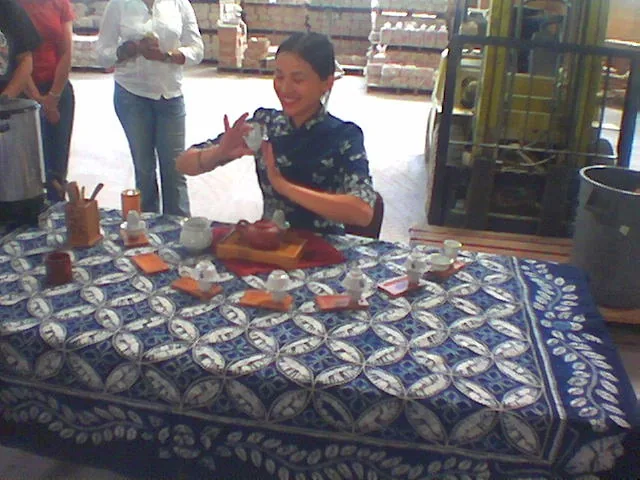
Photo: Wikimedia Commons · CC BY 2.0

Thesis
“茶之为饮发乎神农氏闻于鲁周公” only becomes legible inside Tang tribute tea, monastery tea and literati life.
Text
“As a beverage, tea began with Shennong, the Divine Farmer, and became known through the Duke of Zhou of Lu.”
Context
陆羽认为茶作饮料始于神农氏,到周公时广为传扬。神农尝百草的传说与之相关。
Evidence
- Collation: 各本一致。吴觉农引《神农本草》“神农尝百草,一日而遇七十毒,得荼而解之”,证茶之为饮托始于神农。
- Existing readings: 吴觉农认为"发乎神农"是托古立言:神农尝茶解毒是传说,但反映了远古先民"以茶解药毒"的药用实践——茶先为药、后为饮,此说被后世广泛接受。
Analysis
The largest gap between Tang and now is that tea was simultaneously medicine, tribute and everyday practice. 吴觉农认为"发乎神农"是托古立言:神农尝茶解毒是传说,但反映了远古先民"以茶解药毒"的药用实践——茶先为药、后为饮,此说被后世广泛接受。 Without that, the chapter collapses into botany.
Conclusion
The section does not give a universal rule. It demonstrates a method: read the text, the annotation and the Tang context together before making a modern claim.
Source: The Classic of Tea, Chapter VI · The Drinking, section 2; the original is in the public domain.
Ask what period this person lived in.