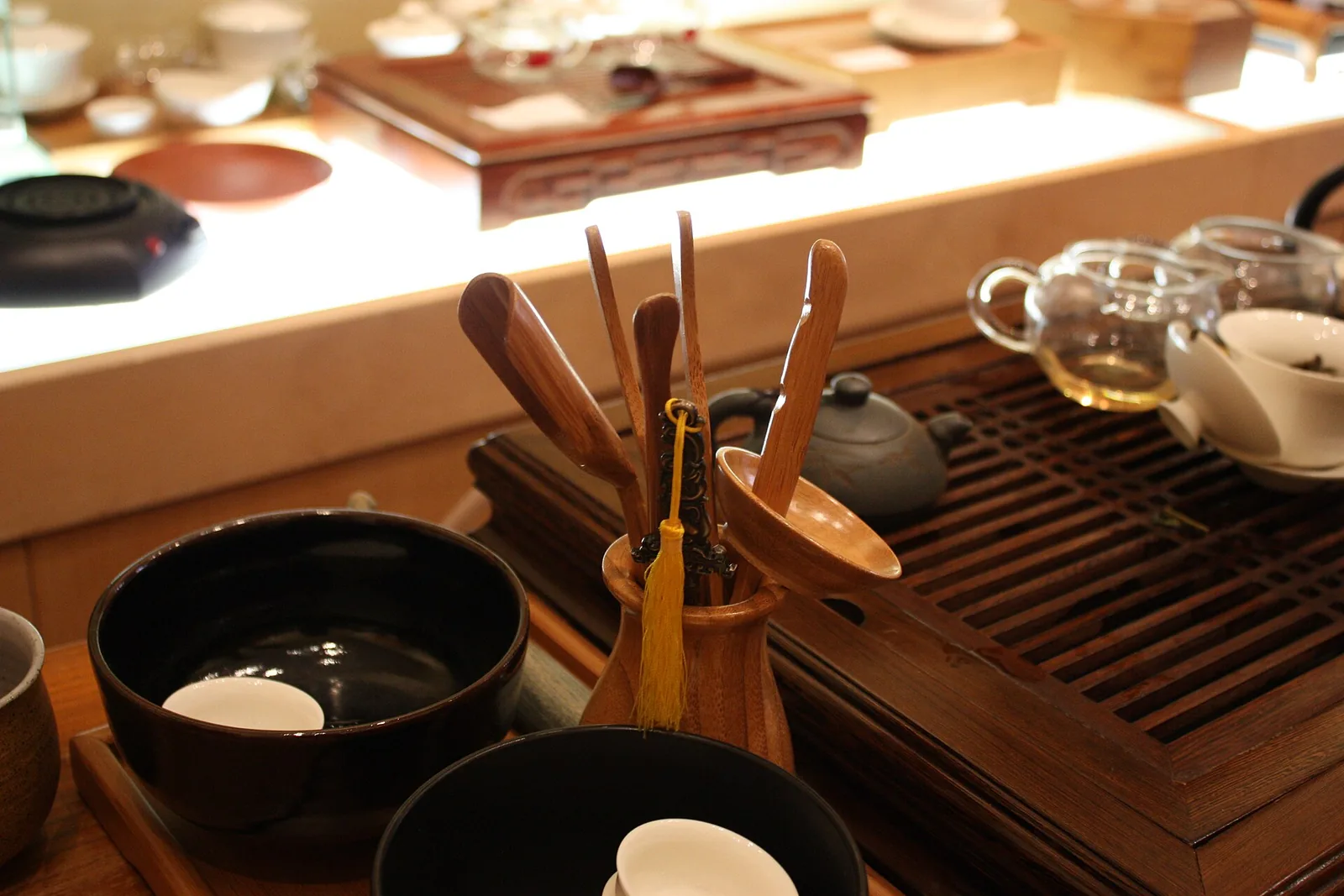
Photo: Wikimedia Commons · CC BY 2.0

Thesis
The common mistake is to lift “但城邑之中王公之门二十四器阙一则茶废矣” out of its sentence and turn it into an absolute rule.
Text
“But in towns and noble households, if one of the twenty-four vessels is missing, the tea ceremony is spoiled.”
Context
但在城市与王公之家,二十四件器具缺一,茶事就办不成了——讲究要齐全。
Evidence
- Collation: "二十四器"各本一致,为全书器具总数之标;历代注家对"二十四"的逐一对应有不同编排。
- Existing readings: 吴觉农指出"二十四器"与"七事皆废"形成对照:野简城繁,陆羽并非一味求简,而是"时位不同、礼数有别"——这也正是茶道的分寸感。
Analysis
The usual misreading extracts “但城邑之中王公之门二十四器阙一则茶废矣” as a slogan. "二十四器"各本一致,为全书器具总数之标;历代注家对"二十四"的逐一对应有不同编排。 In fact every judgment in the chapter carries a limit of place, season and use.
Conclusion
The section does not give a universal rule. It demonstrates a method: read the text, the annotation and the Tang context together before making a modern claim.
Source: The Classic of Tea, Chapter IX · The Omissions, section 2; the original is in the public domain.
When lost, brew a cup first.