Photo: Wikimedia Commons · CC BY 2.0

Thesis
Section 2 is not really about “但城邑之中王公之门二十四器阙一则茶废矣”; it is about how Lu Yu turns tea from a local product into an object of argument.
Text
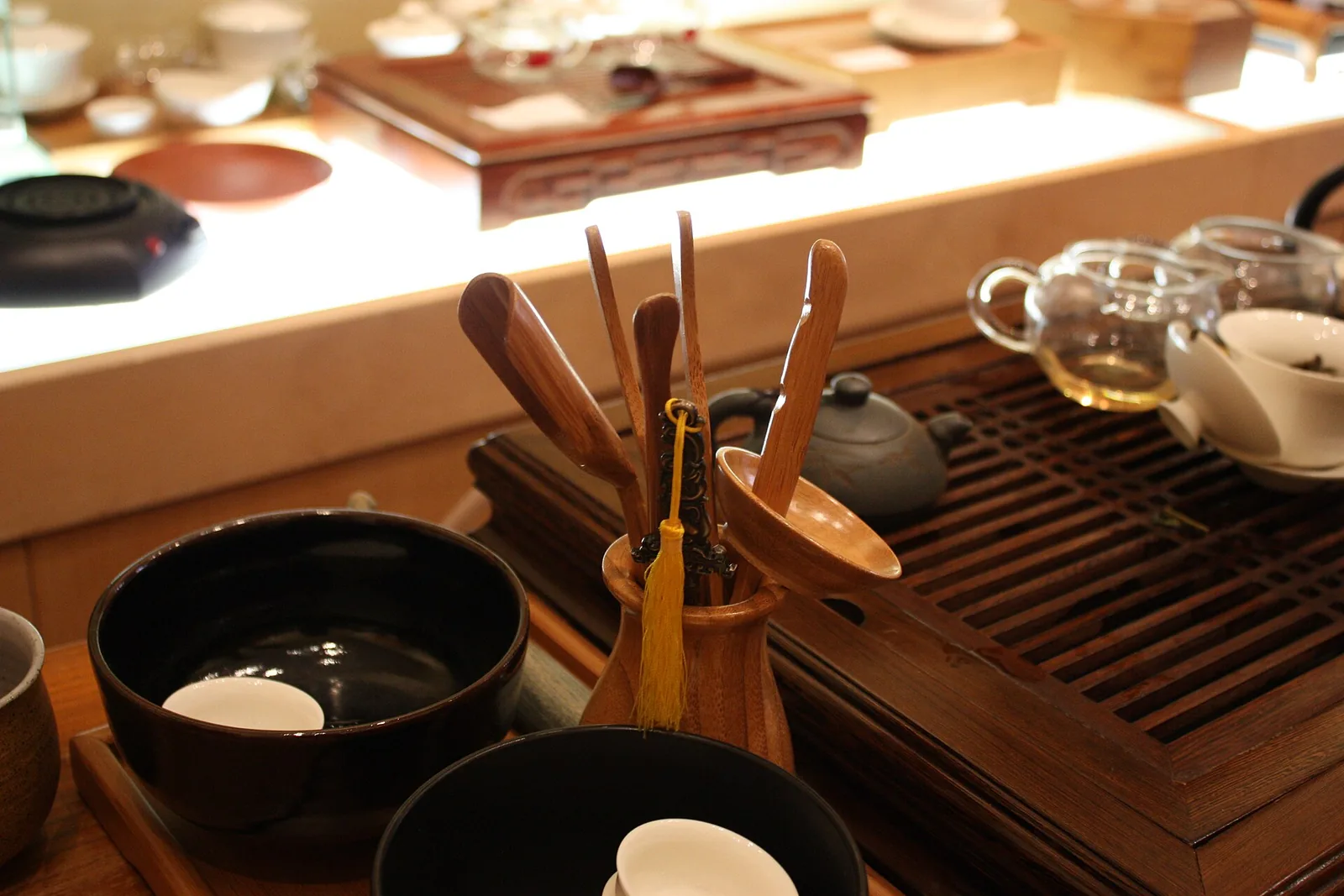
“But in towns and noble households, if one of the twenty-four vessels is missing, the tea ceremony is spoiled.”
Context
但在城市与王公之家,二十四件器具缺一,茶事就办不成了——讲究要齐全。
Evidence
- Collation: "二十四器"各本一致,为全书器具总数之标;历代注家对"二十四"的逐一对应有不同编排。
- Existing readings: 吴觉农指出"二十四器"与"七事皆废"形成对照:野简城繁,陆羽并非一味求简,而是"时位不同、礼数有别"——这也正是茶道的分寸感。
Analysis
Formally, the section gives a judgment, adds material detail, then returns to human practice. 但在城市与王公之家,二十四件器具缺一,茶事就办不成了——讲究要齐全。 That is why the Classic of Tea reads as an argued book rather than a miscellany.
Conclusion
The section does not give a universal rule. It demonstrates a method: read the text, the annotation and the Tang context together before making a modern claim.
Source: The Classic of Tea, Chapter IX · The Omissions, section 2; the original is in the public domain.
Get the character right before the taste.