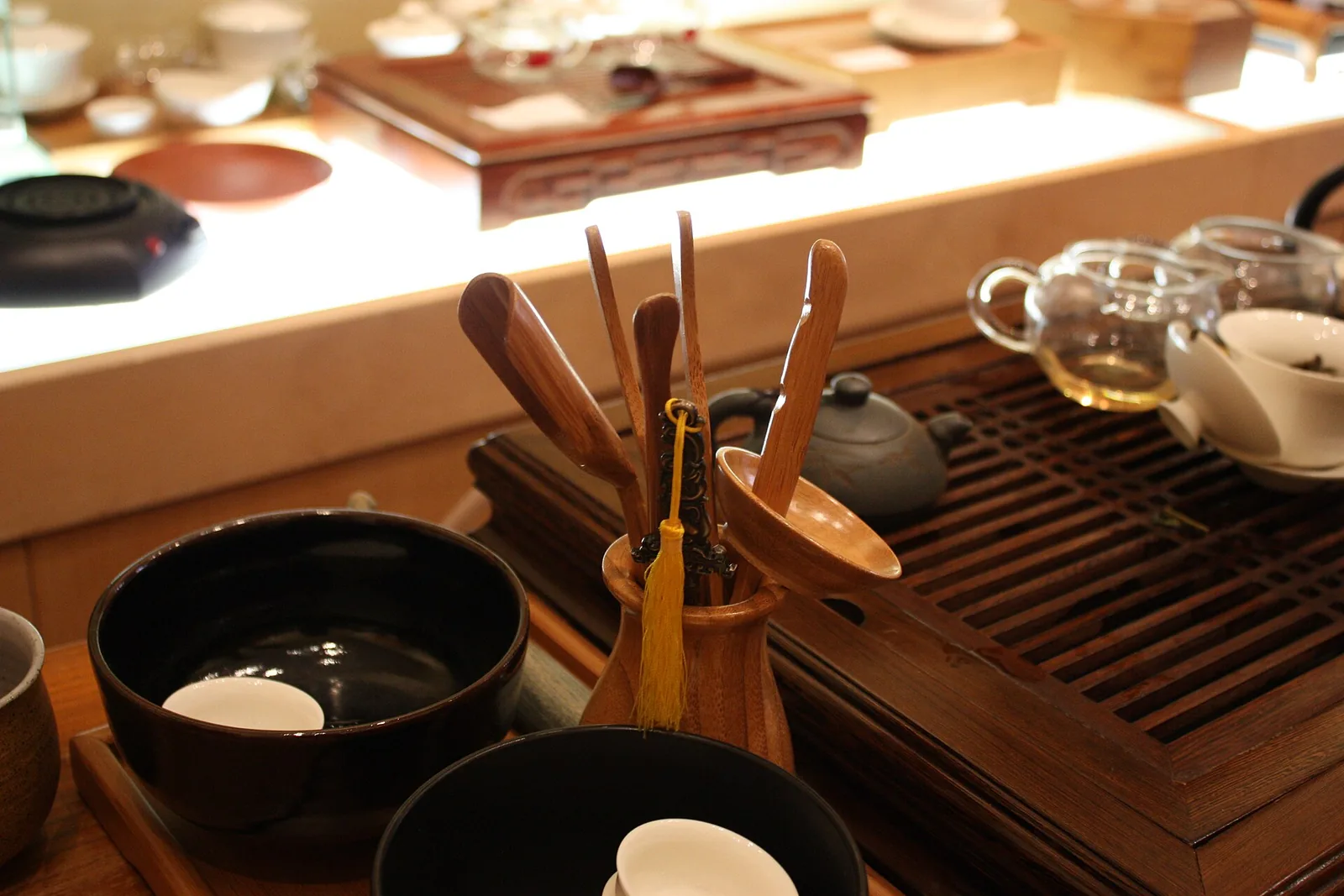
Photo: Wikimedia Commons · CC BY 2.0

Thesis
Section 1 is not really about “其造具若方春禁火之时于野寺山园丛手而掇乃蒸乃”; it is about how Lu Yu turns tea from a local product into an object of argument.
Text
“As for the making tools: if at early spring, during the cold-food days, one gathers with many hands in a wild temple or mountain garden, steaming and pounding on the spot, then drying over fire — the seven implements can all be dispensed with.”
Context
禁火:寒食节禁火。野寺山园现采现做,工具可从简,七种器具都可省去。
Evidence
- Collation: "七事"各本一致,指制茶七种器具名目;"禁火"指寒食节禁烟火之俗,各本无出入。
- Existing readings: 吴觉农解读:此句讲"因地制宜、从简制茶"——野外现采现做可省七器,体现陆羽"器为茶用、不为器所困"的务实精神。
Analysis
Formally, the section gives a judgment, adds material detail, then returns to human practice. 禁火:寒食节禁火。野寺山园现采现做,工具可从简,七种器具都可省去。 That is why the Classic of Tea reads as an argued book rather than a miscellany.
Conclusion
The section does not give a universal rule. It demonstrates a method: read the text, the annotation and the Tang context together before making a modern claim.
Source: The Classic of Tea, Chapter IX · The Omissions, section 1; the original is in the public domain.
Get the character right before the taste.