Photo: Wikimedia Commons · CC BY 2.0

Thesis
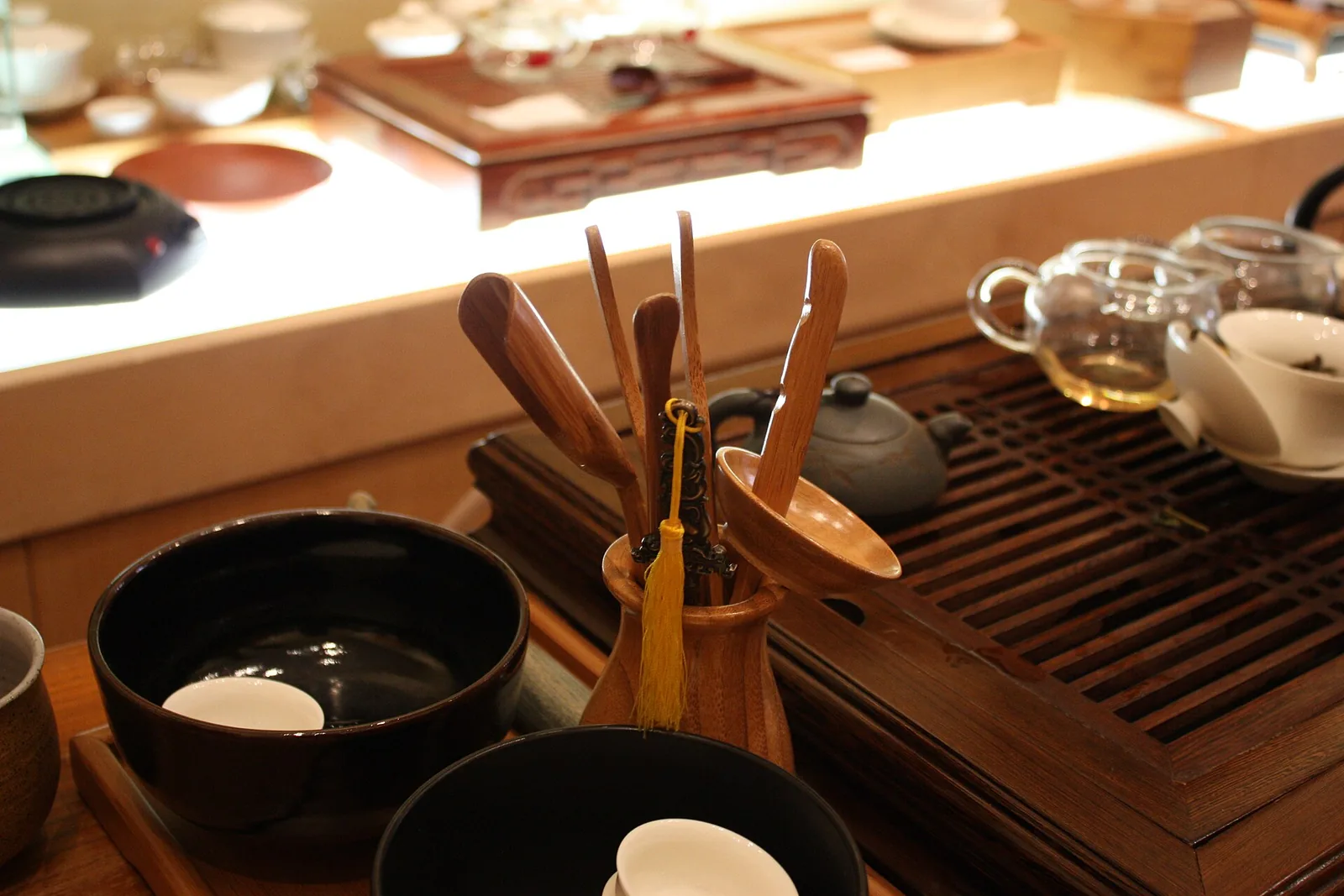
The key words in “甑或木或瓦匪腰而泥篮以箅之篾以系之始其蒸也入” are not ornament. They mark where Tang tea names, vessels and provenance meet.
Text
“The zeng steamer is made of wood or earthenware, narrowed at the waist and sealed with clay. A bamboo tray serves as the grate, tied with bamboo strips. When steaming begins, the leaves enter the grate; when done, they are taken out.”
Context
甑(zèng):蒸器,古蒸茶用。匪腰而泥:腰部收束并用泥封。箅(bì):蒸屉。
Evidence
- Collation: “匪腰而泥"之"匪”,有学者校读为"非"(即"腰部收束"),百川学海本作"匪",属通假用字;四库本同。
- Existing readings: 吴觉农指出:甑为唐代蒸青核心工具,今日本蒸青玉露所用甑器仍存古制;"匪腰而泥"的收腰泥封设计,是为了让蒸汽在甑内回流不散,是古代"以器定味"的巧思。
Analysis
The annotation matters less as philology than as a distinction between name and thing. “匪腰而泥"之"匪”,有学者校读为"非"(即"腰部收束"),百川学海本作"匪",属通假用字;四库本同。 Once names settle, picking, grading and trade can share a language.
Conclusion
The section does not give a universal rule. It demonstrates a method: read the text, the annotation and the Tang context together before making a modern claim.
Source: The Classic of Tea, Chapter II · The Implements, section 3; the original is in the public domain.
Ask what period this person lived in.