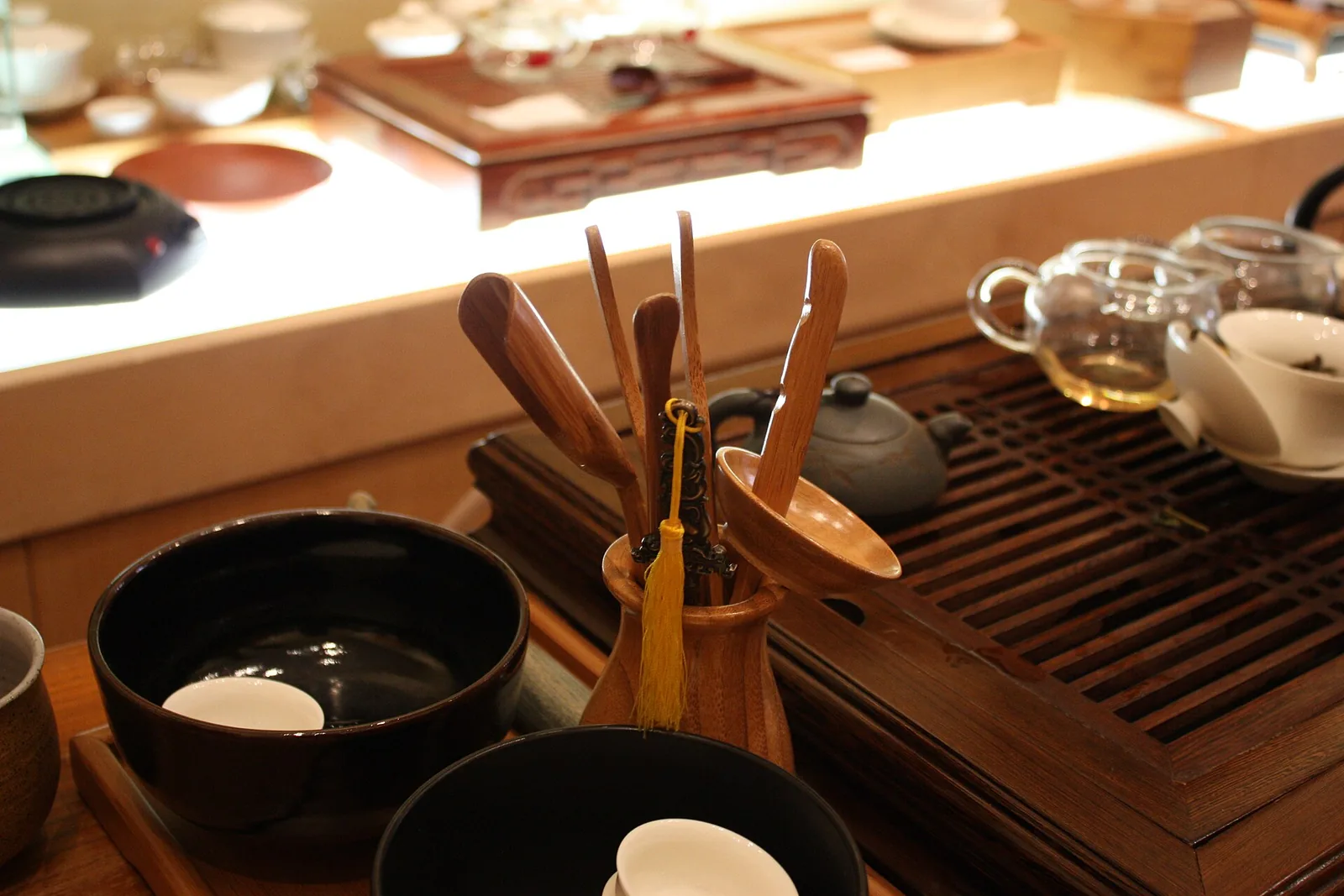
Photo: Wikimedia Commons · CC BY 2.0

Thesis
Section 3 is not really about “甑或木或瓦匪腰而泥篮以箅之篾以系之始其蒸也入”; it is about how Lu Yu turns tea from a local product into an object of argument.
Text
“The zeng steamer is made of wood or earthenware, narrowed at the waist and sealed with clay. A bamboo tray serves as the grate, tied with bamboo strips. When steaming begins, the leaves enter the grate; when done, they are taken out.”
Context
甑(zèng):蒸器,古蒸茶用。匪腰而泥:腰部收束并用泥封。箅(bì):蒸屉。
Evidence
- Collation: “匪腰而泥"之"匪”,有学者校读为"非"(即"腰部收束"),百川学海本作"匪",属通假用字;四库本同。
- Existing readings: 吴觉农指出:甑为唐代蒸青核心工具,今日本蒸青玉露所用甑器仍存古制;"匪腰而泥"的收腰泥封设计,是为了让蒸汽在甑内回流不散,是古代"以器定味"的巧思。
Analysis
Formally, the section gives a judgment, adds material detail, then returns to human practice. 甑(zèng):蒸器,古蒸茶用。匪腰而泥:腰部收束并用泥封。箅(bì):蒸屉。 That is why the Classic of Tea reads as an argued book rather than a miscellany.
Conclusion
The section does not give a universal rule. It demonstrates a method: read the text, the annotation and the Tang context together before making a modern claim.
Source: The Classic of Tea, Chapter II · The Implements, section 3; the original is in the public domain.
Get the character right before the taste.