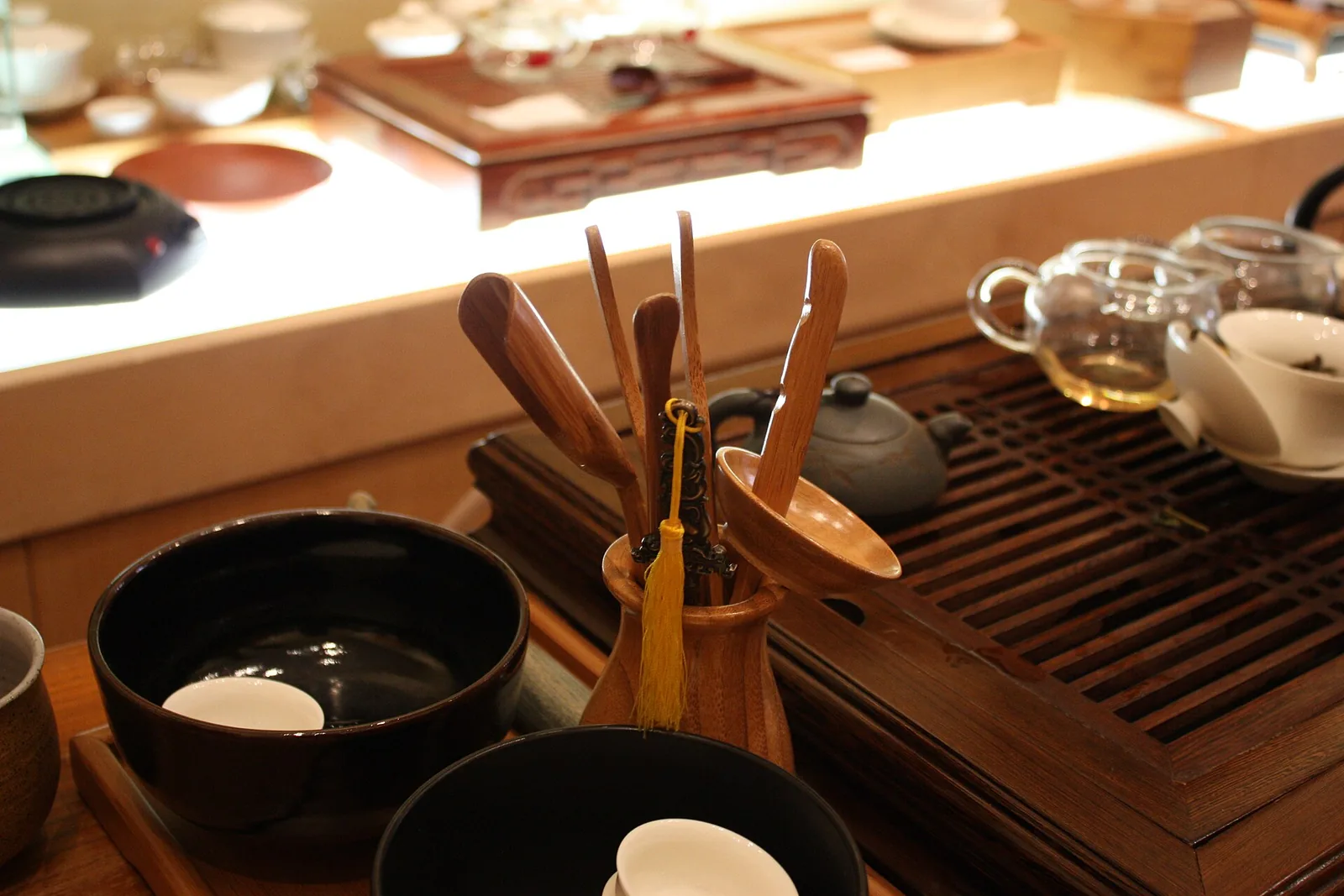
Photo: Wikimedia Commons · CC BY 2.0

Thesis
“灶无用突者釜用唇口者” only becomes legible inside Tang tribute tea, monastery tea and literati life.
Text
“The stove should have no chimney; the cauldron should have a lipped rim.”
Context
突:烟囱。唇口:宽边、便于密封的锅口。蒸茶要用不设烟囱的灶、有宽口的锅。
Evidence
- Collation: 本句极简,各本无显著异文。吴觉农校注时特别说明"突"即烟囱,"唇口"指宽边锅沿。
- Existing readings: 吴觉农释此句:蒸茶用无烟囱的闷灶,便于保温聚汽;宽口锅则便于放入蒸屉。可见唐代蒸青对"密闭聚热"已有朴素认知。
Analysis
The largest gap between Tang and now is that tea was simultaneously medicine, tribute and everyday practice. 吴觉农释此句:蒸茶用无烟囱的闷灶,便于保温聚汽;宽口锅则便于放入蒸屉。可见唐代蒸青对"密闭聚热"已有朴素认知。 Without that, the chapter collapses into botany.
Conclusion
The section does not give a universal rule. It demonstrates a method: read the text, the annotation and the Tang context together before making a modern claim.
Source: The Classic of Tea, Chapter II · The Implements, section 2; the original is in the public domain.
Ask what period this person lived in.