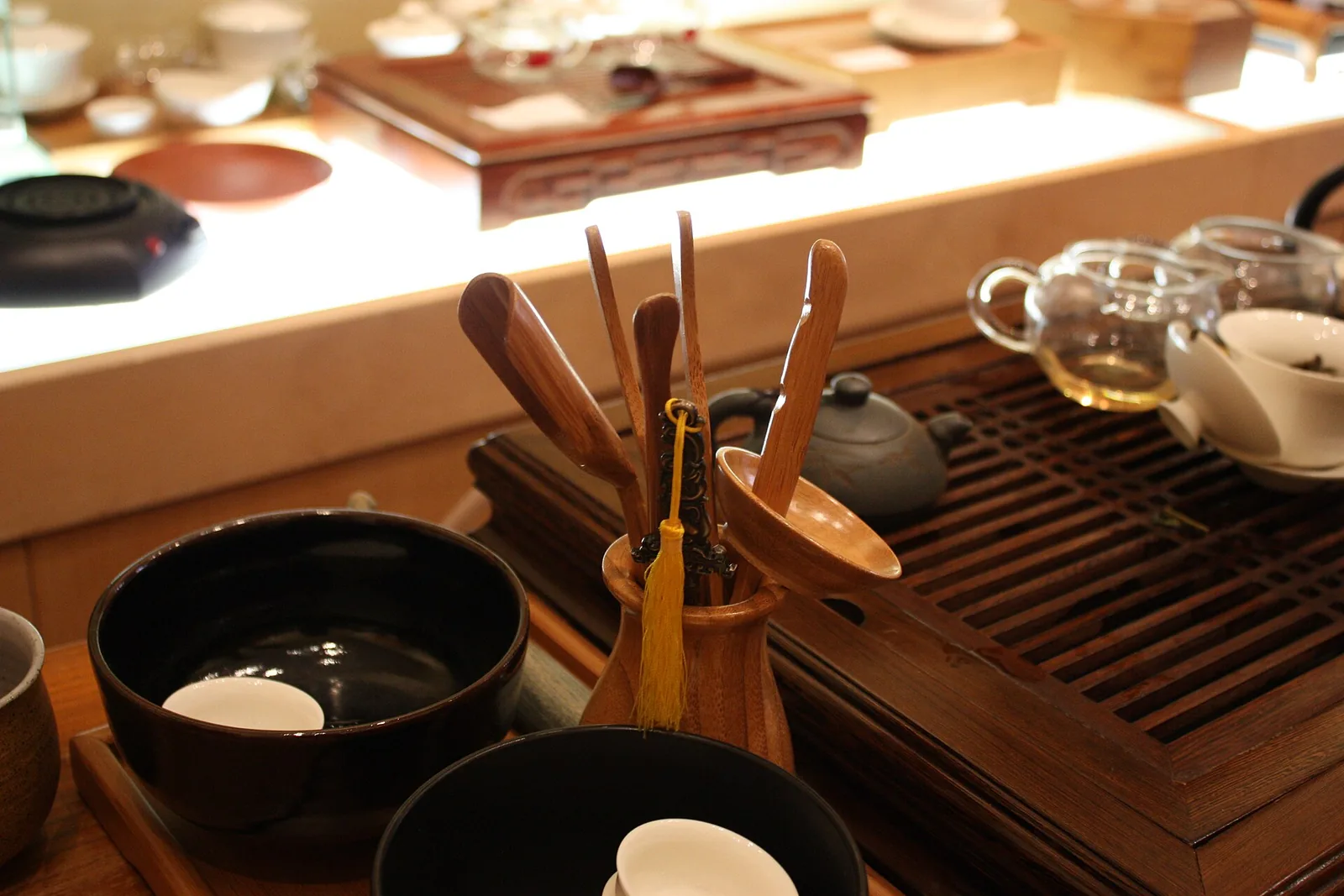
Photo: Wikimedia Commons · CC BY 2.0

Thesis
“穿江东淮南剖竹为之巴山峡川纫榖皮为之江东以一” only becomes legible inside Tang tribute tea, monastery tea and literati life.
Text
“The chuan string is made in Jiangdong and Huainan from split bamboo, and in Bashan and the gorges from twisted mulberry-bark. In Jiangdong one jin is a large string, half a jin a medium, and four or five liang a small one.”
Context
穿:把茶饼串起来的绳子。江东、淮南用剖开的竹皮;巴山峡川用榖(gǔ)树皮搓成。江东以一斤为一穿上,半斤为中穿,四五两为小穿。
Evidence
- Collation: "纫榖皮"各本一致,榖(构)树皮纤维坚韧可制绳。吴觉农注:此句详记唐代茶饼称重与包装规格。
- Existing readings: 吴觉农据"穿"之规格指出:唐代饼茶已标准化——一斤/半斤/四五两三档,便于运输与交易,是早期"茶叶商品化"的实物证据。
Analysis
The largest gap between Tang and now is that tea was simultaneously medicine, tribute and everyday practice. 吴觉农据"穿"之规格指出:唐代饼茶已标准化——一斤/半斤/四五两三档,便于运输与交易,是早期"茶叶商品化"的实物证据。 Without that, the chapter collapses into botany.
Conclusion
The section does not give a universal rule. It demonstrates a method: read the text, the annotation and the Tang context together before making a modern claim.
Source: The Classic of Tea, Chapter II · The Implements, section 10; the original is in the public domain.
Ask what period this person lived in.