Photo: Wikimedia Commons · CC BY-SA 4.0

Thesis
The key words in “凡煮水一升酌分五碗乘热连饮之以重浊凝其下精英” are not ornament. They mark where Tang tea names, vessels and provenance meet.
Text
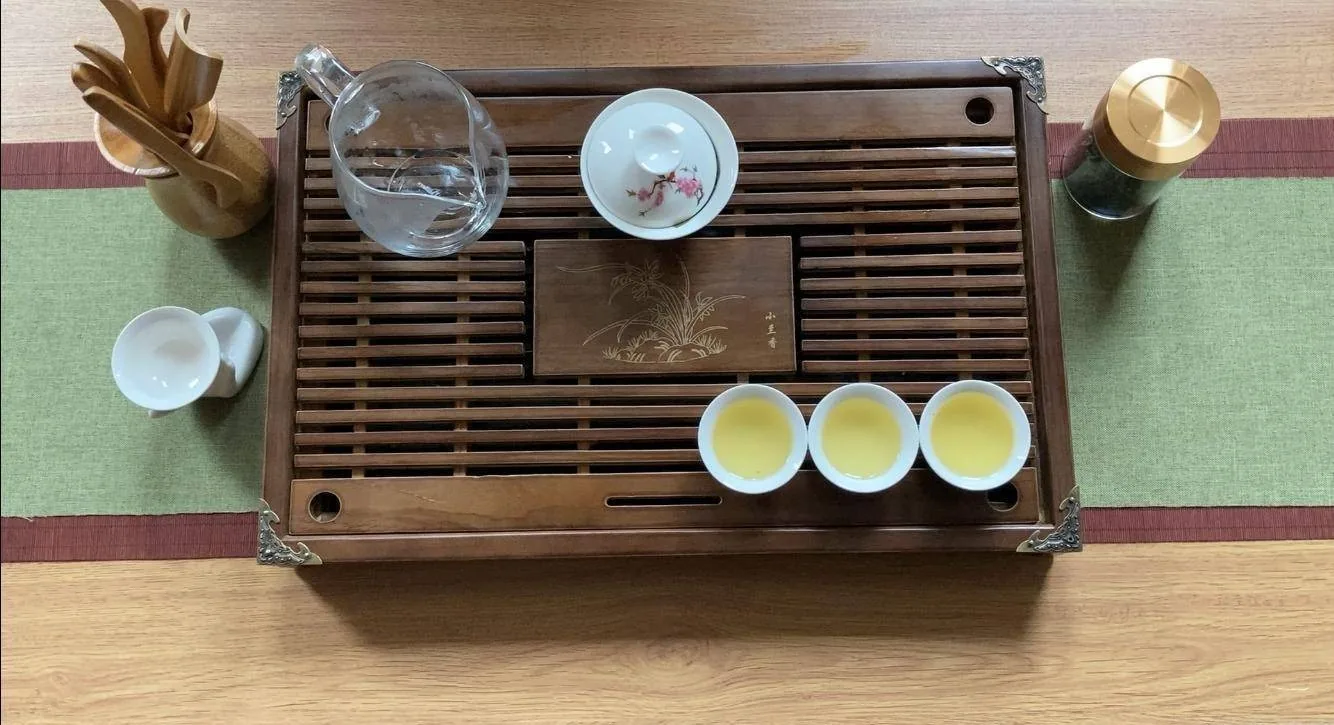
“For each sheng of water, divide it into five bowls and drink while hot, in succession. The heavy and muddy settles below; the essence and fineness floats above.”
Context
酌分五碗:一升水分五碗。乘热连饮:趁热连着喝。重浊:厚重浑浊的部分。精英:精华。
Evidence
- Collation: 各本一致。吴觉农注:"重浊凝其下,精英浮其上"道出茶汤分层之理。
- Existing readings: 吴觉农指出"乘热连饮"是陆羽的饮茶要领:热饮则精华在口,凉则精英散而浊味现——今人"茶要趁热喝"的老话,正源于此。
Analysis
The annotation matters less as philology than as a distinction between name and thing. 各本一致。吴觉农注:"重浊凝其下,精英浮其上"道出茶汤分层之理。 Once names settle, picking, grading and trade can share a language.
Conclusion
The section does not give a universal rule. It demonstrates a method: read the text, the annotation and the Tang context together before making a modern claim.
Source: The Classic of Tea, Chapter V · The Brewing, section 7; the original is in the public domain.
Ask what period this person lived in.