Tea Classics

Brewing · 2025-12-01 · 社区规则

Chapter V · The Brewing · Section 3: At a contemporary tea table — reading “已上水老不可食也”

3 条回复

#1A
A-Qing · 2025-12-01 08:02

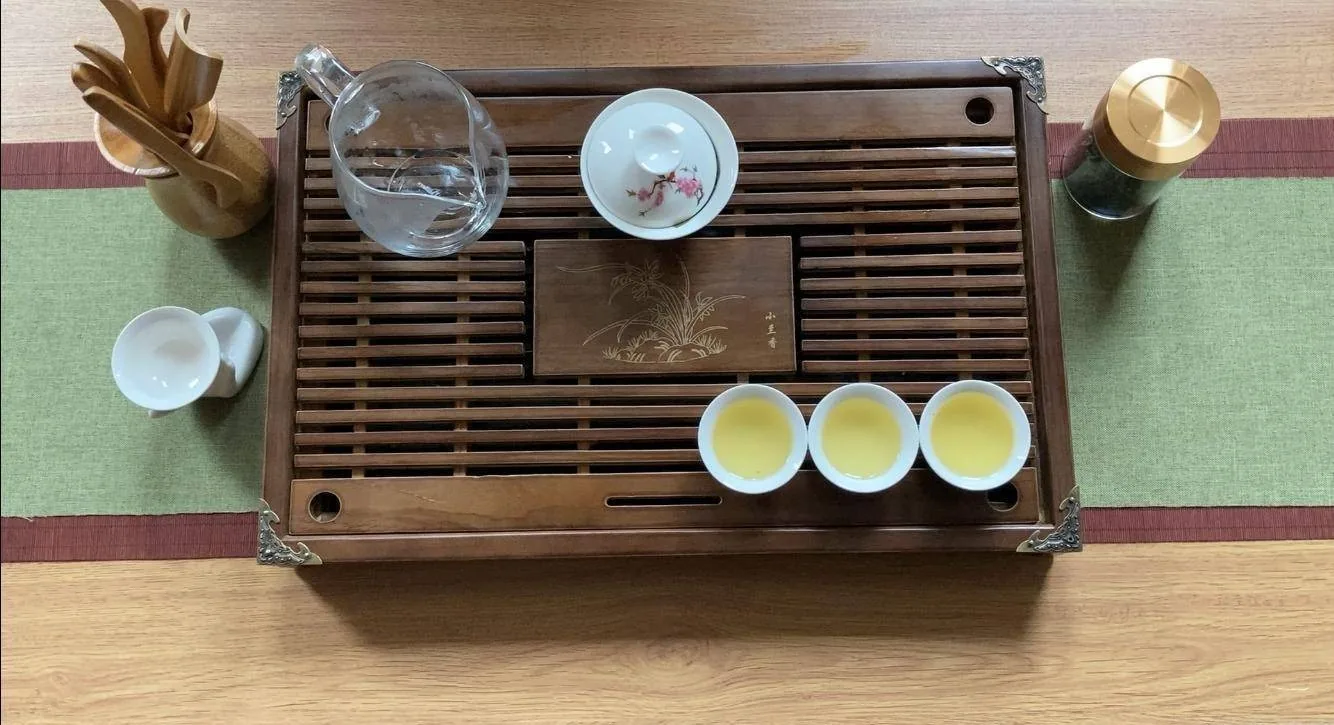
Photo: Wikimedia Commons · CC BY-SA 4.0

Thesis

“已上水老不可食也” still has operational value at a contemporary tea table, provided Tang conditions are not silently universalised.

Text

“Beyond this, the water is old and cannot be drunk.”

Context

超过三沸水就"老"了,不宜饮用——这是古人对火候的精准把握。

Evidence

  • Collation: 本句紧承三沸,各本一致,无版本差异。
  • Existing readings: 吴觉农指出"水老"即水中溶氧散尽、钙镁离子浓缩,茶味发涩——现代科学印证了陆羽"水老不可食"的判断。

Analysis

To repeat this section today is not to copy a Tang utensil list. It is to keep its order of judgment: leaf first, then water and fire, then the table.

Conclusion

The section does not give a universal rule. It demonstrates a method: read the text, the annotation and the Tang context together before making a modern claim.


Source: The Classic of Tea, Chapter V · The Brewing, section 3; the original is in the public domain.

Tea is grown and made, not just discussed.

引用
#2M
Marginalia · 2025-12-01 08:49

Modern tea science would split the sentence into cultivar, soil, light and plucking variables. 吴觉农指出"水老"即水中溶氧散尽、钙镁离子浓缩,茶味发涩——现代科学印证了陆羽"水老不可食"的判断。 The variables remain useful, but none of them alone explains the cup.

Get the character right before the taste.

引用
#3V
Vessel Zhou · 2025-12-01 09:36

Storage adds another variable: moisture and temperature. 本句紧承三沸,各本一致,无版本差异。 Old and young tea do not share one shelf life, so “the older the better” is not a rule.

A vessel carries tea and its period.

引用
#4W
Water Notes · 2025-12-01 10:23

As a new reader, I first took “已上水老不可食也” as a conclusion. Reading the annotation to section 3 again, it is clearly a judgment with conditions attached.

Half a cup is water.

引用
1–4 共 4

登录后回复