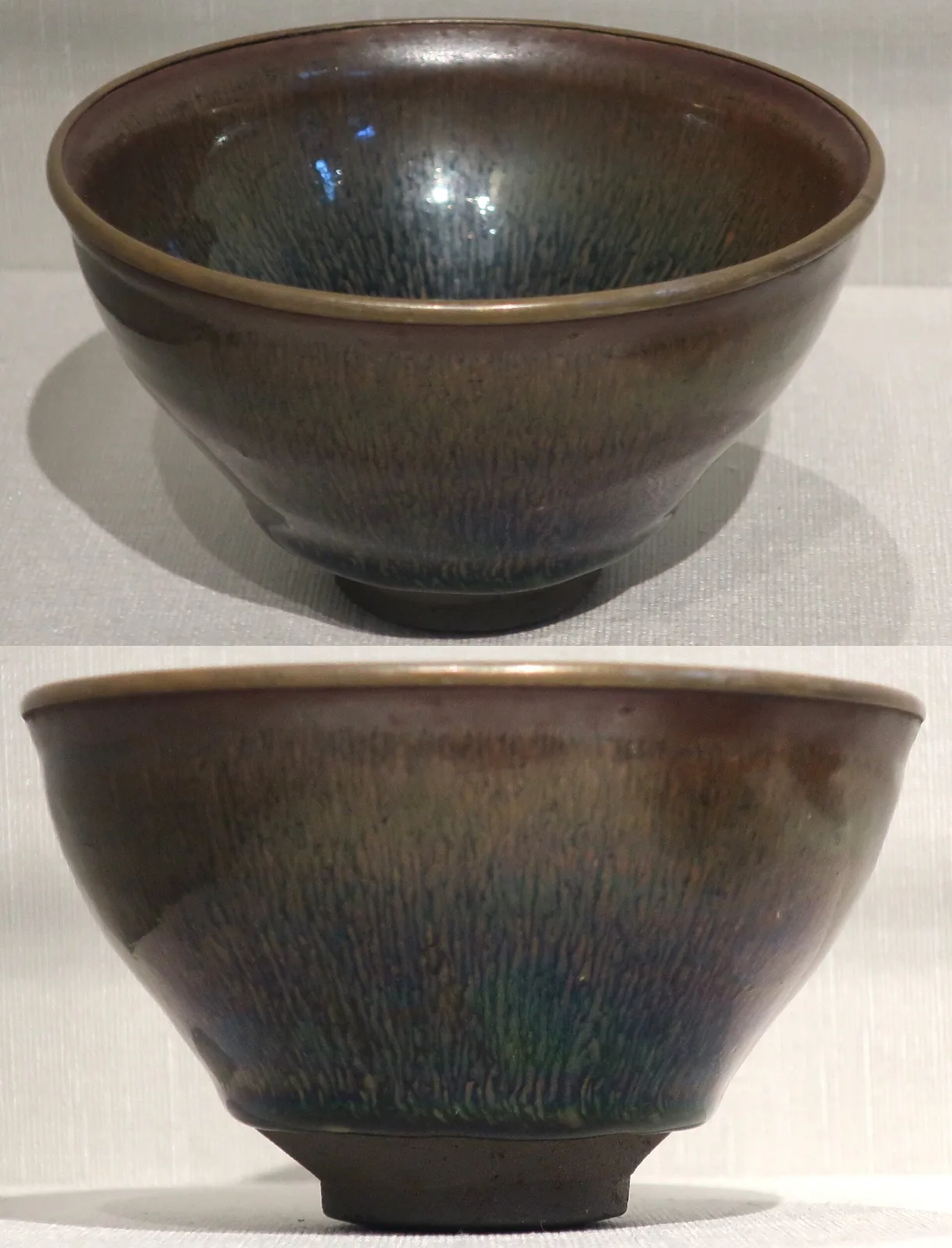
Photo: Wikimedia Commons · CC0

Thesis
The key words in “酌之以匏酌置于碗内令沫饽均沫饽汤之华也” are not ornament. They mark where Tang tea names, vessels and provenance meet.
Text
“Ladle it with a gourd into the bowls, so that the foam is evenly divided. The foam — the froth — is the flower of the soup.”
Context
酌:舀。匏:葫芦瓢。沫饽(mò bō):茶汤表面的浮沫。华:精华。
Evidence
- Collation: 各本一致。"沫饽,汤之华也"为千古名句,道尽茶汤浮沫之美。
- Existing readings: 吴觉农指出唐代茶汤尚"沫饽"(细密的浮沫),视其为茶之精华——这与今人泡茶"以沫为嫌"截然相反,却是宋人点茶"咬盏"之美的先声。
Analysis
The annotation matters less as philology than as a distinction between name and thing. 各本一致。"沫饽,汤之华也"为千古名句,道尽茶汤浮沫之美。 Once names settle, picking, grading and trade can share a language.
Conclusion
The section does not give a universal rule. It demonstrates a method: read the text, the annotation and the Tang context together before making a modern claim.
Source: The Classic of Tea, Chapter IV · The Vessels, section 9; the original is in the public domain.
Ask what period this person lived in.