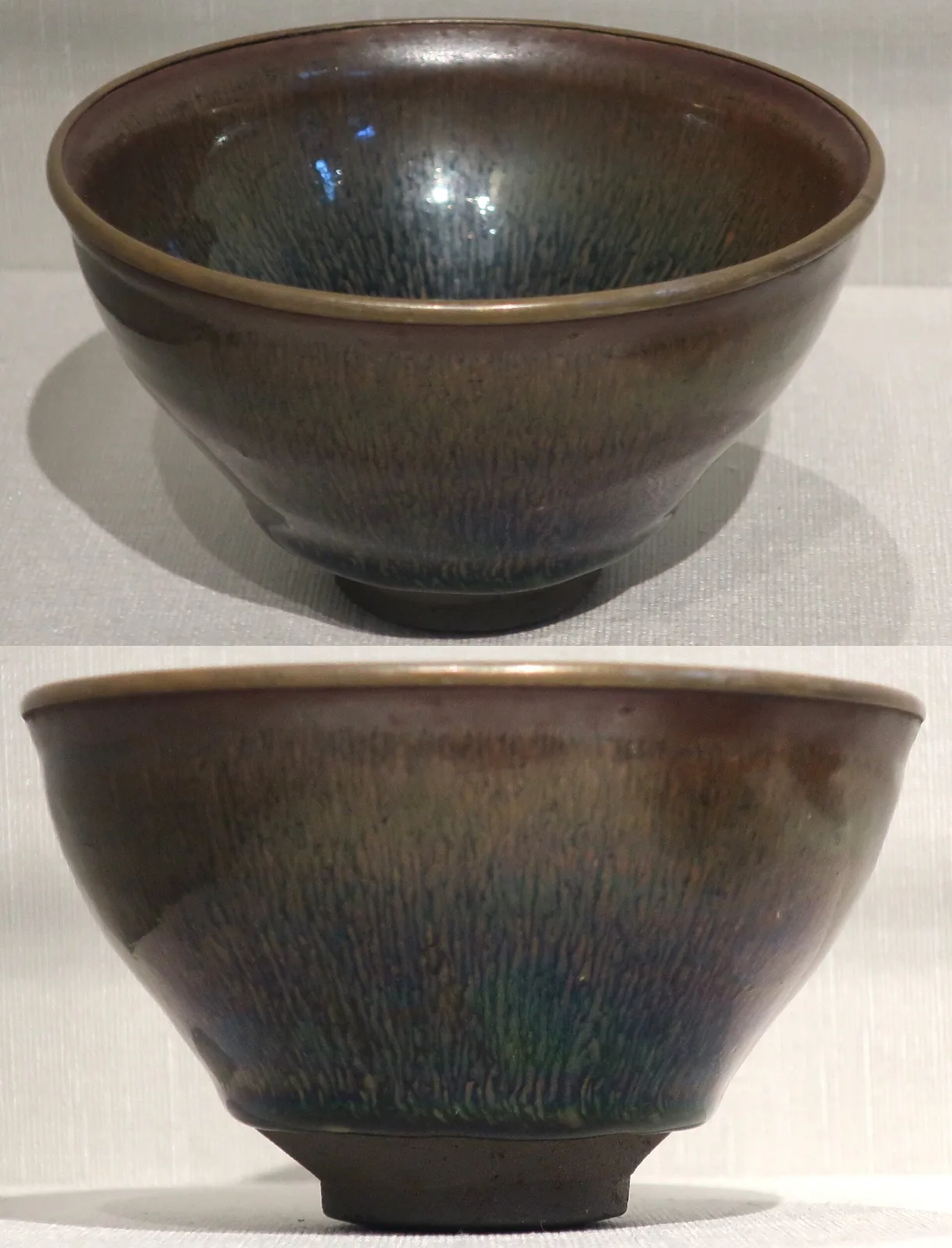
Photo: Wikimedia Commons · CC0

Thesis
“其火用炭次用劲薪其炭曾经燔炙为膻腻所及及膏木” only becomes legible inside Tang tribute tea, monastery tea and literati life.
Text
“For the fire, charcoal is best, and sturdy firewood next. Charcoal that has been used for roasting, stained with fat and rankness, as well as resinous wood and rotten utensils, must not be used.”
Context
劲薪:耐烧的柴。燔炙(fán zhì):烧烤过。膻腻:腥膻油腻。膏木:有油脂的松柏等木。败器:腐朽的器物。
Evidence
- Collation: 各本一致。吴觉农注:此句讲燃料选择,“膏木”"败器"皆能产生异味与烟气,破坏茶香。
- Existing readings: 吴觉农评此句为"燃料学":炭火无烟无味最宜煮茶,沾油之炭与松柏膏木皆会串味——陆羽对火候细节的讲究,尽显茶道"洁净"之美。
Analysis
The largest gap between Tang and now is that tea was simultaneously medicine, tribute and everyday practice. 吴觉农评此句为"燃料学":炭火无烟无味最宜煮茶,沾油之炭与松柏膏木皆会串味——陆羽对火候细节的讲究,尽显茶道"洁净"之美。 Without that, the chapter collapses into botany.
Conclusion
The section does not give a universal rule. It demonstrates a method: read the text, the annotation and the Tang context together before making a modern claim.
Source: The Classic of Tea, Chapter IV · The Vessels, section 5; the original is in the public domain.
Ask what period this person lived in.