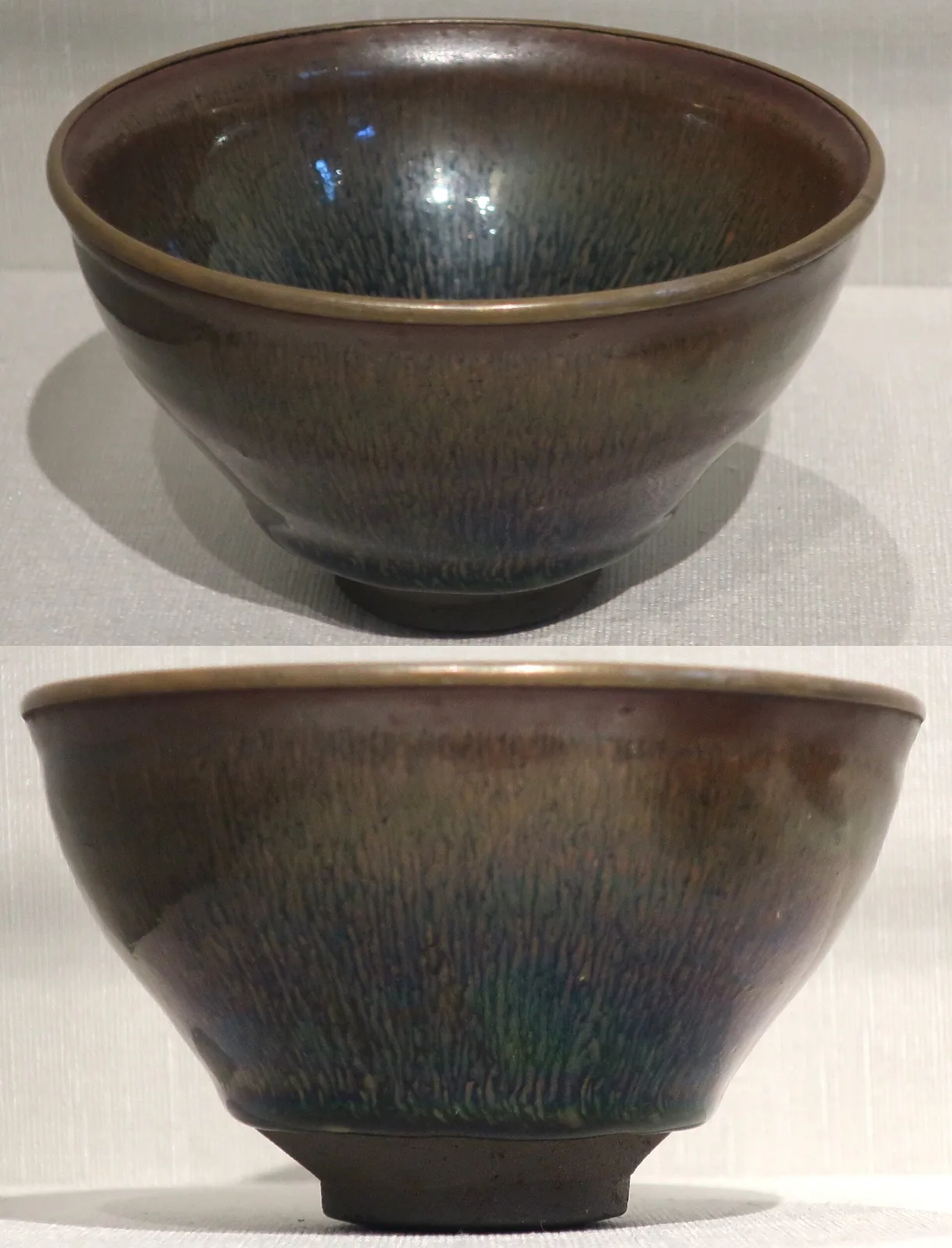
Photo: Wikimedia Commons · CC0

Thesis
“凡煮水一升用末方寸匕若好薄者减之嗜浓者增之” only becomes legible inside Tang tribute tea, monastery tea and literati life.
Text
“For one sheng of boiling water, use one fangcun-spoon of tea powder. If you like it thin, reduce it; if you crave strength, increase it.”
Context
末:碾碎的茶末。方寸匕:古代量取粉末的小勺。薄:味淡。浓:味浓。
Evidence
- Collation: 各本一致。吴觉农注:"方寸匕"为古量器,约合今 2 克左右,此句是唐代最早的"投茶量"标准。
- Existing readings: 吴觉农指出"一升水一方寸匕"是最早的茶水比(约 1:500),并可随口味加减——陆羽早在千年前就确立了"看人调浓淡"的灵活投茶原则。
Analysis
The largest gap between Tang and now is that tea was simultaneously medicine, tribute and everyday practice. 吴觉农指出"一升水一方寸匕"是最早的茶水比(约 1:500),并可随口味加减——陆羽早在千年前就确立了"看人调浓淡"的灵活投茶原则。 Without that, the chapter collapses into botany.
Conclusion
The section does not give a universal rule. It demonstrates a method: read the text, the annotation and the Tang context together before making a modern claim.
Source: The Classic of Tea, Chapter IV · The Vessels, section 4; the original is in the public domain.
Ask what period this person lived in.