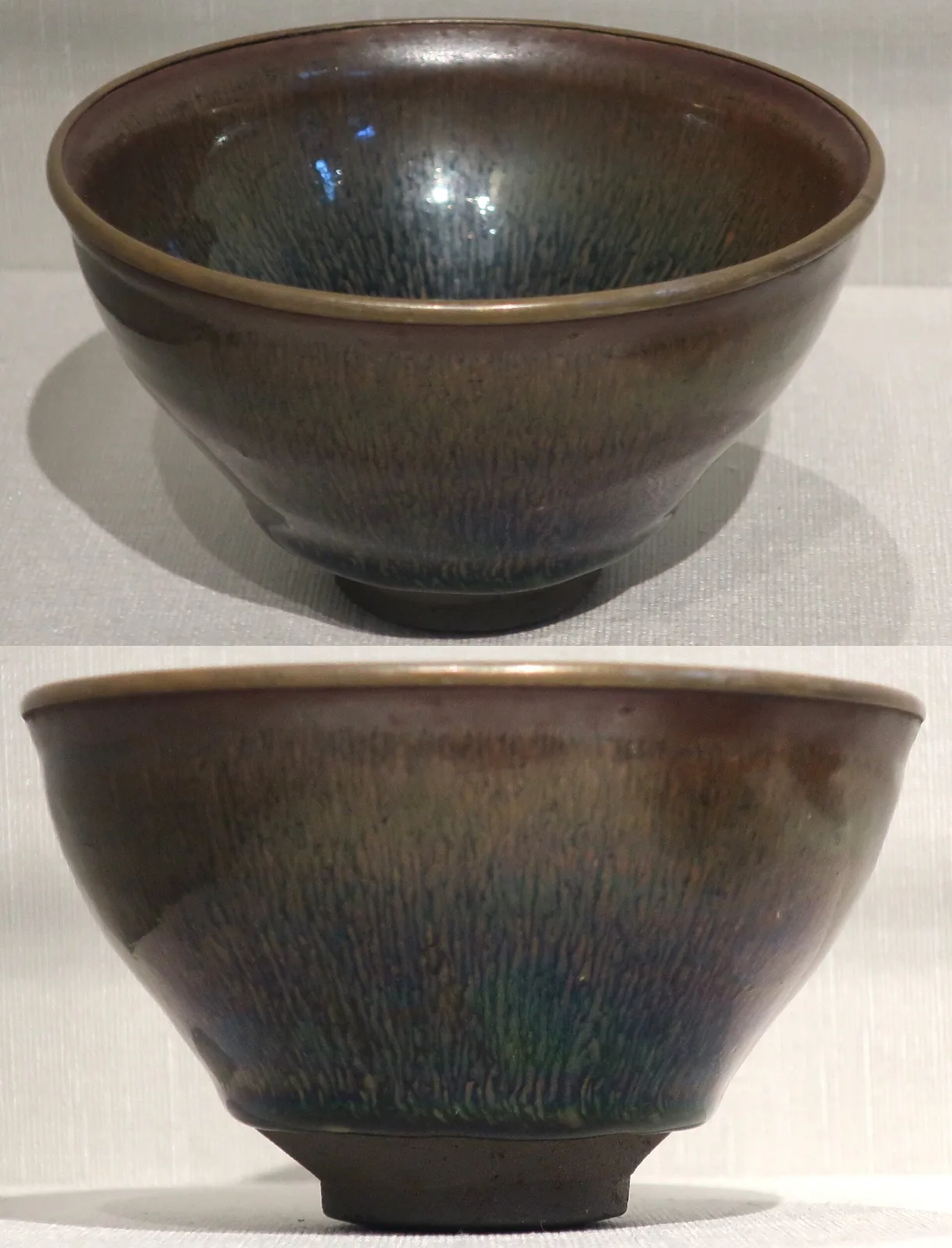
Photo: Wikimedia Commons · CC0

Thesis
“鍑以生铁为之其内模土而外模沙土滑于内易其摩涤” still has operational value at a contemporary tea table, provided Tang conditions are not silently universalised.
Text
“The fu cauldron is made of raw iron. Its inner mold is clay, so the inside is smooth and easy to scour; its outer mold is sand, so the outside is rough and endures the flame.”
Context
鍑(fù):煮水的锅。内壁用土模使其光滑易洗,外壁用沙模使其粗糙耐烧。
Evidence
- Collation: “其内模土,而外模沙”:百川学海本作此,四库本同;历代注家对"模土模沙"的铸造工艺阐释一致。
- Existing readings: 吴觉农评此句为"冶铸常识的精准表述":内壁光洁减少茶味附着、便于清洗,外壁粗糙增大受热面积、耐烧耐用——一锅两性,匠心尽显。
Analysis
To repeat this section today is not to copy a Tang utensil list. It is to keep its order of judgment: leaf first, then water and fire, then the table.
Conclusion
The section does not give a universal rule. It demonstrates a method: read the text, the annotation and the Tang context together before making a modern claim.
Source: The Classic of Tea, Chapter IV · The Vessels, section 2; the original is in the public domain.
Tea is grown and made, not just discussed.