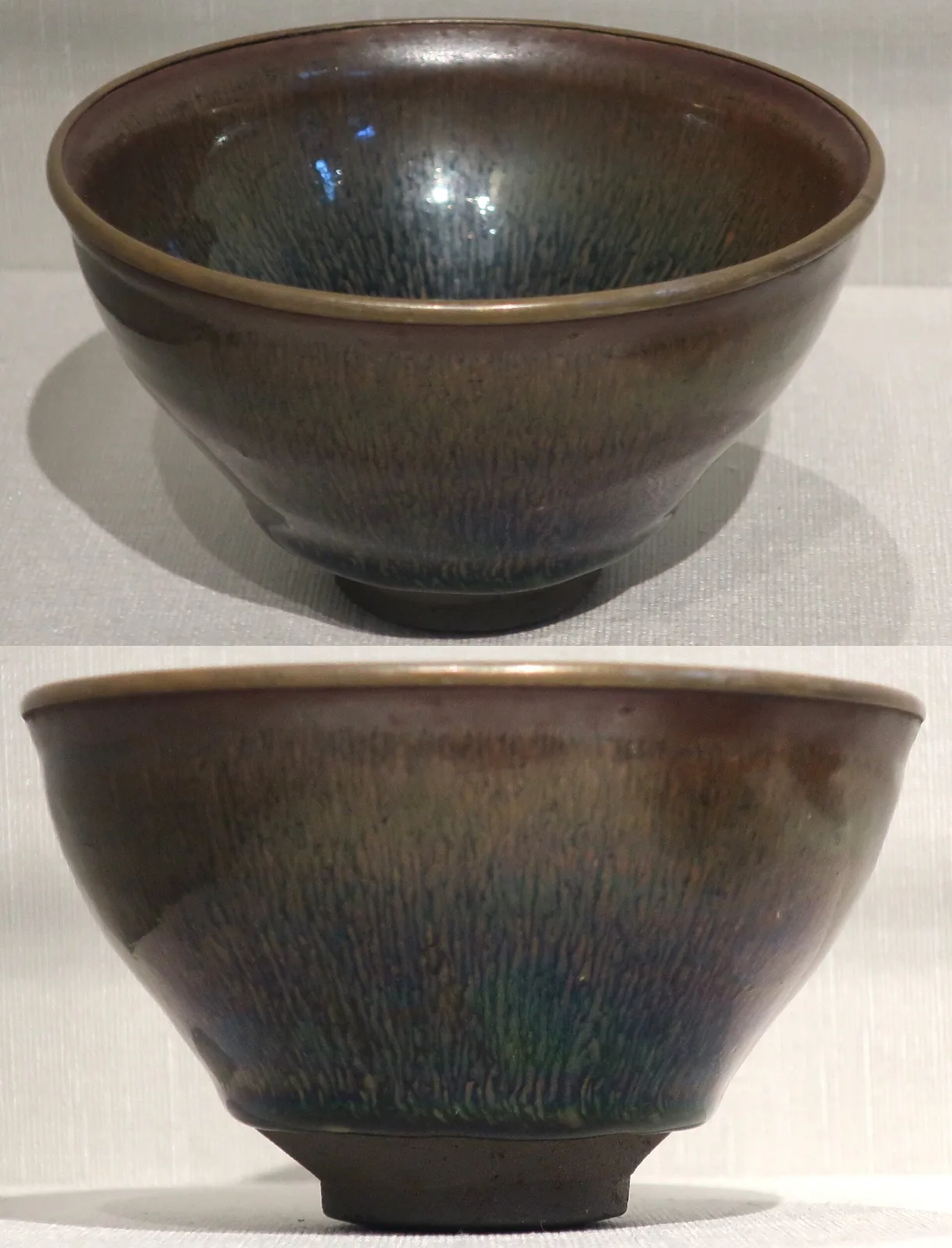
Photo: Wikimedia Commons · CC0

Thesis
Section 1 is not really about “风炉以铜铁铸之如古鼎形”; it is about how Lu Yu turns tea from a local product into an object of argument.
Text
“The wind stove is cast of copper or iron, shaped like an ancient tripod.”
Context
风炉:煮水用的炉子,仿古鼎形制,以铜铁铸造。
Evidence
- Collation: 各本一致。唯后世刊本或作"古鼎形"或作"古鼎之形",无实质差异。
- Existing readings: 吴觉农指出:风炉取鼎形,既稳固聚火,又寓"以茶事承三代礼器"之意;陆羽为风炉铭刻"坎上巽下离于中"等卦辞,可见其以易理入茶器的审美。
Analysis
Formally, the section gives a judgment, adds material detail, then returns to human practice. 风炉:煮水用的炉子,仿古鼎形制,以铜铁铸造。 That is why the Classic of Tea reads as an argued book rather than a miscellany.
Conclusion
The section does not give a universal rule. It demonstrates a method: read the text, the annotation and the Tang context together before making a modern claim.
Source: The Classic of Tea, Chapter IV · The Vessels, section 1; the original is in the public domain.
Get the character right before the taste.