Photo: Wikimedia Commons · CC BY 4.0

Thesis
Section 5 is not really about “茶之芽者发于丛薄之上有三枝四枝五枝者选其中枝”; it is about how Lu Yu turns tea from a local product into an object of argument.
Text
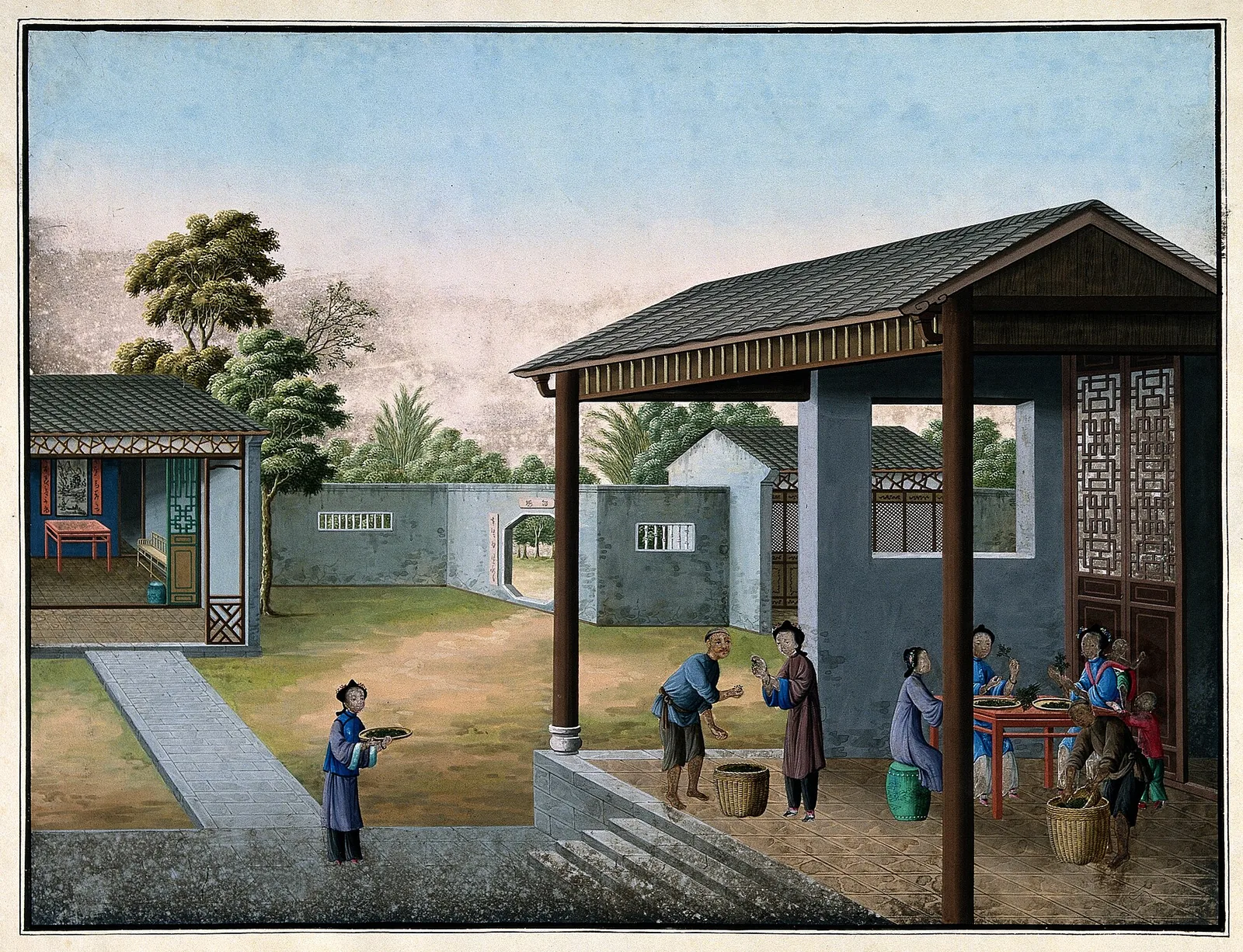
“The buds that sprout from dense thickets, with three, four, or five shoots, are picked by selecting those that rise most boldly.”
Context
芽者:细弱的芽叶。丛薄:草木丛生的低矮处。颖拔:突出、挺拔。
Evidence
- Collation: 各本一致。吴觉农注:此句承上文"笋者上芽者次",讲细芽如何择优而采。
- Existing readings: 吴觉农指出:陆羽对"笋者"与"芽者"分而述之,说明唐代采茶已按芽叶老嫩分级采摘——"选其中枝颖拔者"即是"挑芽"工艺的雏形。
Analysis
Formally, the section gives a judgment, adds material detail, then returns to human practice. 芽者:细弱的芽叶。丛薄:草木丛生的低矮处。颖拔:突出、挺拔。 That is why the Classic of Tea reads as an argued book rather than a miscellany.
Conclusion
The section does not give a universal rule. It demonstrates a method: read the text, the annotation and the Tang context together before making a modern claim.
Source: The Classic of Tea, Chapter III · The Making, section 5; the original is in the public domain.
Get the character right before the taste.