Photo: Wikimedia Commons · CC BY 4.0

Thesis
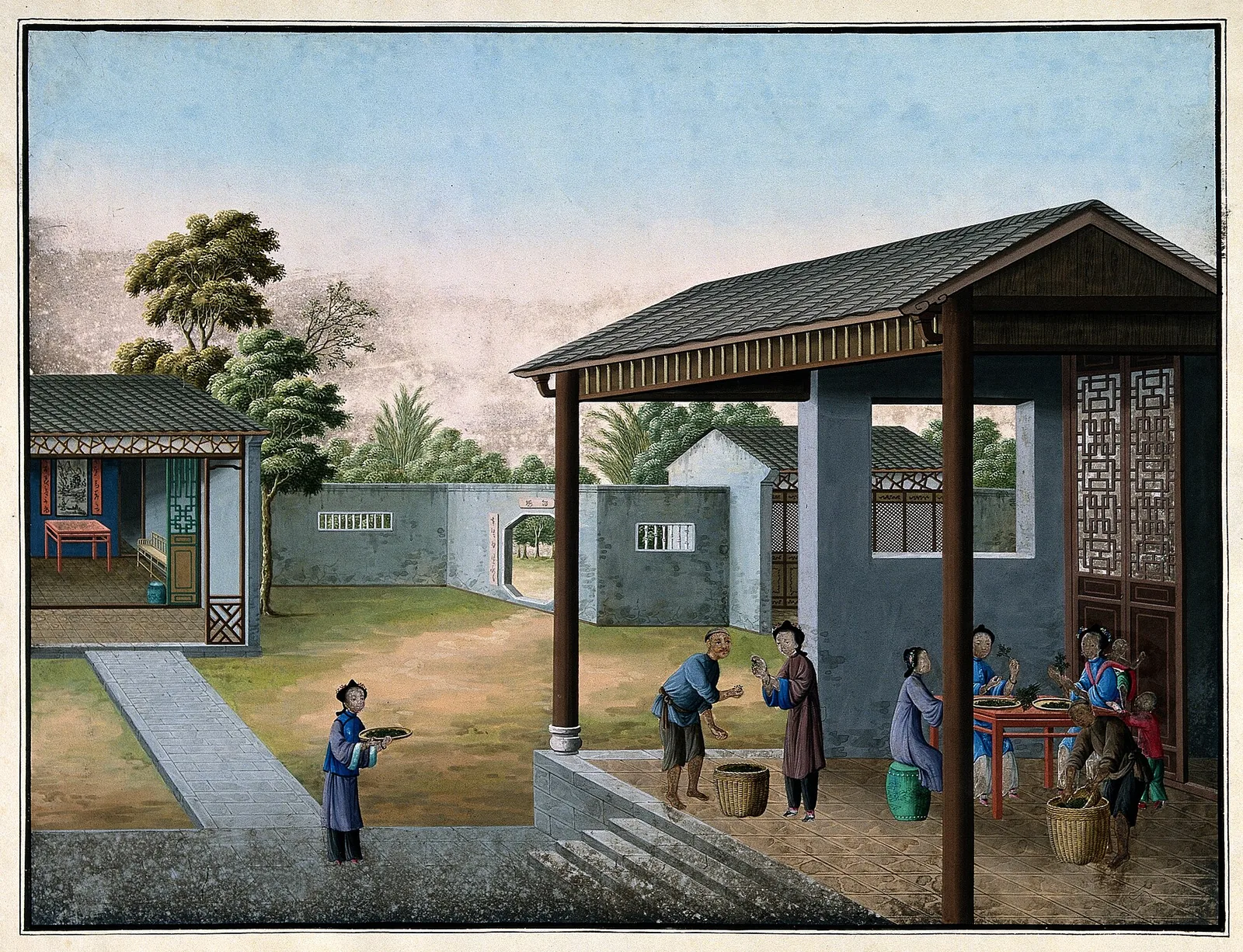
Section 3 is not really about “其日有雨不采晴有云不采晴采之”; it is about how Lu Yu turns tea from a local product into an object of argument.
Text
“On rainy days do not pick; on clear days with clouds do not pick; only on perfectly clear days pick.”
Context
雨天不采,晴而有云也不采;须是晴朗无云之日才采。
Evidence
- Collation: 本句强调择天采摘,各本文字一致。“晴有云不采"为后人不解之处,吴觉农释为"微阴欲雨,芽叶含水量高易烂”。
- Existing readings: 吴觉农解读:雨天或阴天芽叶含水多,蒸后易闷黄变质;陆羽定"晴采"标准,是对鲜叶质量的严格把关。
Analysis
Formally, the section gives a judgment, adds material detail, then returns to human practice. 雨天不采,晴而有云也不采;须是晴朗无云之日才采。 That is why the Classic of Tea reads as an argued book rather than a miscellany.
Conclusion
The section does not give a universal rule. It demonstrates a method: read the text, the annotation and the Tang context together before making a modern claim.
Source: The Classic of Tea, Chapter III · The Making, section 3; the original is in the public domain.
Get the character right before the taste.