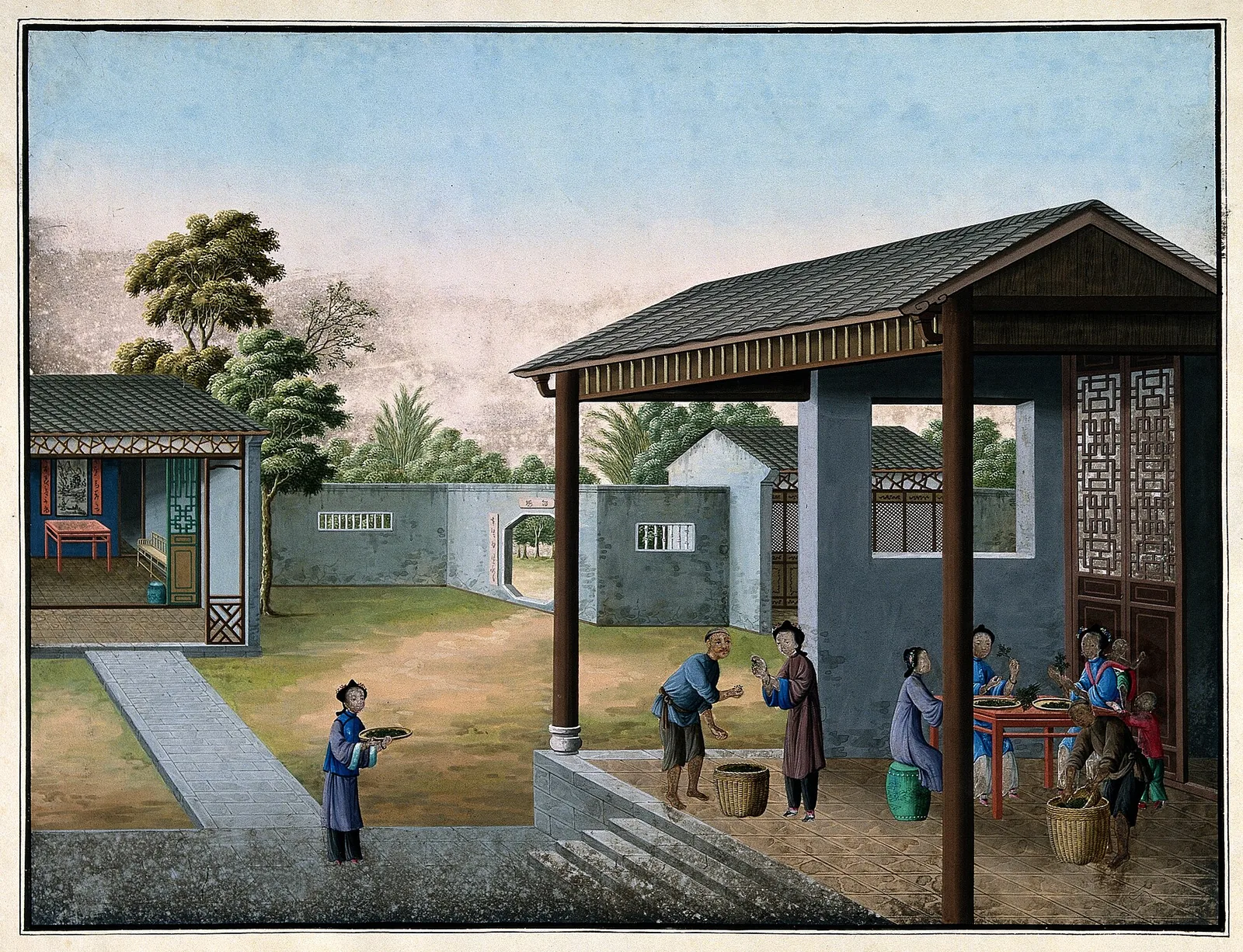
Photo: Wikimedia Commons · CC BY 4.0

Thesis
Section 2 is not really about “茶之笋者生烂石沃土长四五寸若薇蕨始抽凌露采焉”; it is about how Lu Yu turns tea from a local product into an object of argument.
Text
“The bamboo-shoot-like buds, growing in rich rocky soil, reach four or five inches, like young ferns just unfolding; they are picked while the morning dew is still on them.”
Context
笋者:肥壮的芽头。薇蕨始抽:像薇、蕨刚抽芽。凌露采:趁着晨露未干时采摘。
Evidence
- Collation: “长四五寸”:百川学海本作"长四五寸",四库本同,各本无出入。
- Existing readings: 吴觉农特别赞赏"凌露采":带露采摘可保芽叶鲜爽,避免日晒失水,这一"趁鲜"原则至今仍是名优绿茶采摘的铁律。
Analysis
Formally, the section gives a judgment, adds material detail, then returns to human practice. 笋者:肥壮的芽头。薇蕨始抽:像薇、蕨刚抽芽。凌露采:趁着晨露未干时采摘。 That is why the Classic of Tea reads as an argued book rather than a miscellany.
Conclusion
The section does not give a universal rule. It demonstrates a method: read the text, the annotation and the Tang context together before making a modern claim.
Source: The Classic of Tea, Chapter III · The Making, section 2; the original is in the public domain.
Get the character right before the taste.