Photo: Wikimedia Commons · CC BY 4.0

Thesis
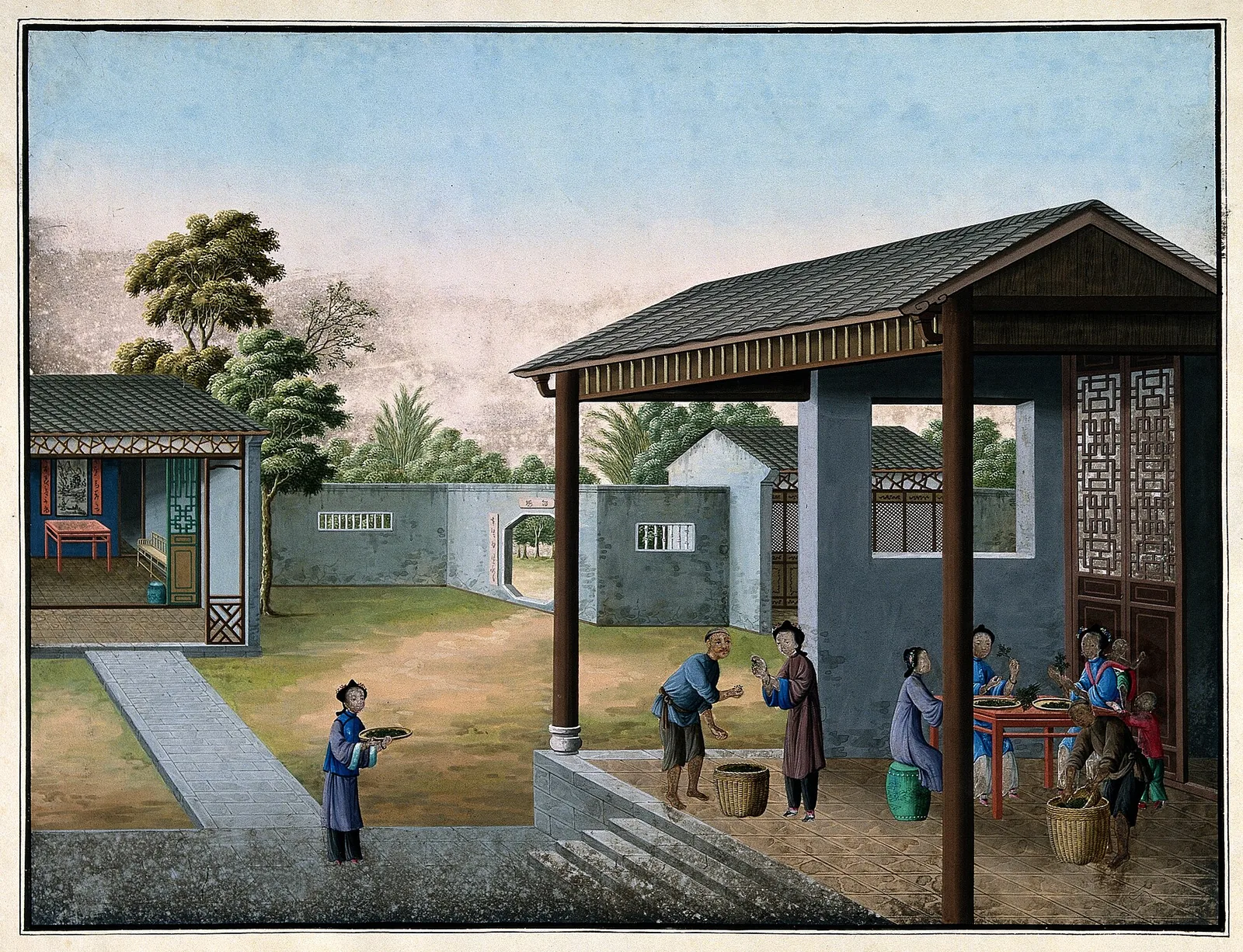
Section 1 is not really about “凡采茶在二月三月四月之间”; it is about how Lu Yu turns tea from a local product into an object of argument.
Text
“Tea is gathered in the second, third, and fourth months.”
Context
指农历二至四月,即春茶季。古人认为春茶质最优。
Evidence
- Collation: 各本一致。有学者指出"二月、三月、四月"为农历,对应今公历三月中至五月中,正值各茶区春茶季。
- Existing readings: 吴觉农考证:唐代茶区气候偏暖,农历二三月采茶与今"明前""雨前"观念呼应——陆羽认为春茶质最优,此论开后世"春茶贵"之先河。
Analysis
Formally, the section gives a judgment, adds material detail, then returns to human practice. 指农历二至四月,即春茶季。古人认为春茶质最优。 That is why the Classic of Tea reads as an argued book rather than a miscellany.
Conclusion
The section does not give a universal rule. It demonstrates a method: read the text, the annotation and the Tang context together before making a modern claim.
Source: The Classic of Tea, Chapter III · The Making, section 1; the original is in the public domain.
Get the character right before the taste.