Photo: Wikimedia Commons · CC BY 4.0

Full text
[1] “Tea is gathered in the second, third, and fourth months.”
[2] “The bamboo-shoot-like buds, growing in rich rocky soil, reach four or five inches, like young ferns just unfolding; they are picked while the morning dew is still on them.”
[3] “On rainy days do not pick; on clear days with clouds do not pick; only on perfectly clear days pick.”
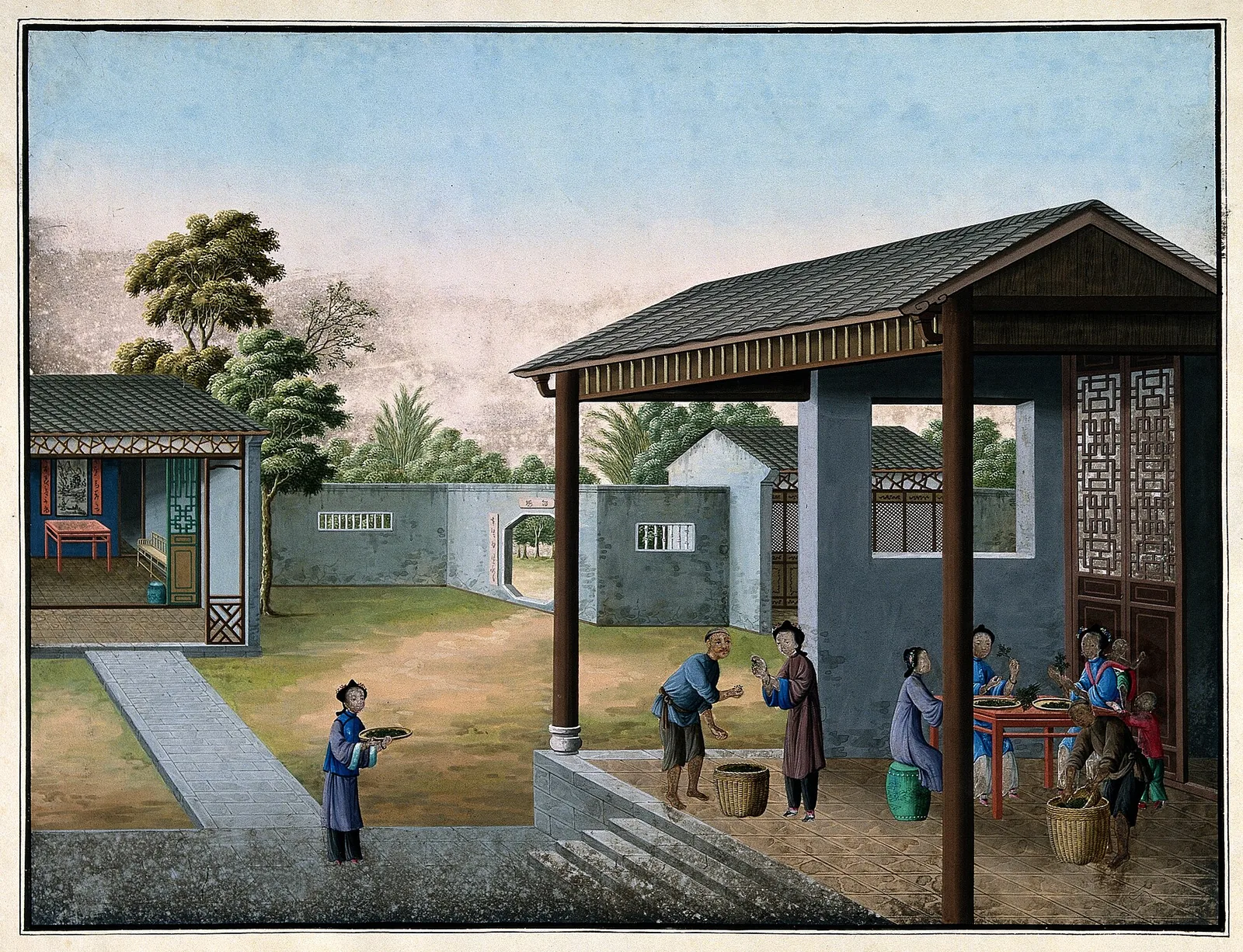
[4] “Steam it, pound it, press it, roast it, string it, seal it — and the tea is done.”
[5] “The buds that sprout from dense thickets, with three, four, or five shoots, are picked by selecting those that rise most boldly.”
[6] “Tea takes a thousand forms. To speak roughly: some are like barbarian boots, puckered and shriveled; some like the chest of a wild ox, ribbed and draped; some like clouds rising from mountains, coiled and rolling; some like a light breeze over water, rippling and serene.”
[7] “From picking to sealing there are seven processes; from barbarian boots to frosted lotus there are eight grades.”
[8] “Some praise tea that is glossy, black, and even — that is the lowest judgment. Some praise what is wrinkled, yellow, and uneven — that is a middling judgment. But to call everything good or everything bad is the highest judgment.”
[9] “The good and ill of tea rest in the transmitted oral formula.”
Note
This chapter has 9 sections. The English text above is a working translation for discussion; the Chinese original is in the public domain. Name the edition when quoting, since Chapter One and several other chapters contain variants.
Source: Wikisource