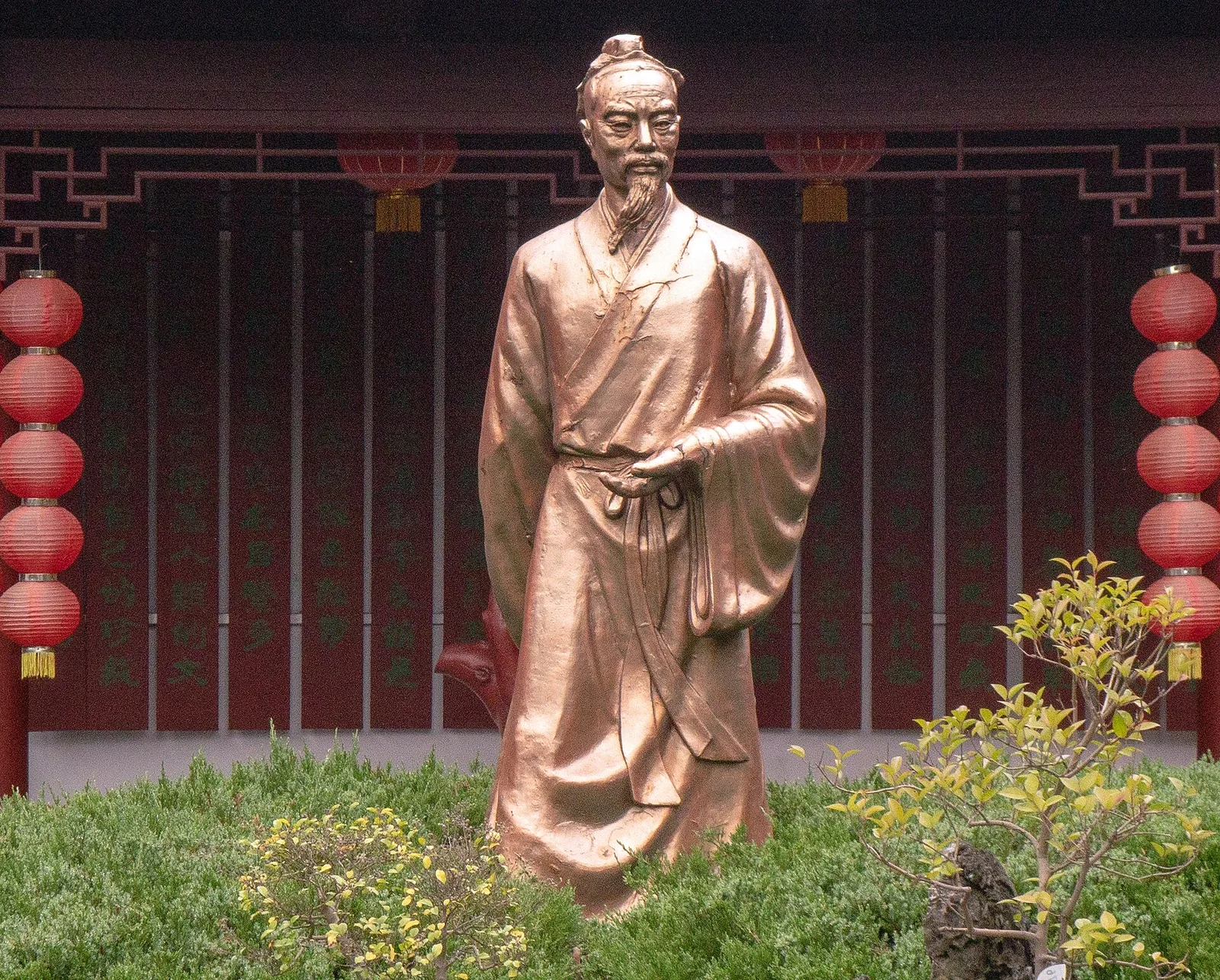
Photo: Wikimedia Commons · CC BY-SA 4.0

Thesis
“司马相如《凡将篇》"乌喙桔梗芫华款冬贝母木檗” only becomes legible inside Tang tribute tea, monastery tea and literati life.
Text
“Sima Xiangru’s Fanyang pian lists among drugs wu-hui, jiegeng, yuanhua, kuandong, beimu, mubo, lou, qincao, shaoyao, gui, loulu, feilian, chuan-cha, bailian, baizhi, changpu, mangxiao, guan, jiao, and zhuyu.”
Context
司马相如:西汉辞赋家。《凡将篇》:字书。荈诧:茶之别名,为文献中"茶"的最早记载之一。
Evidence
- Collation: "荈诧"为《凡将篇》所载茶名,各本一致。吴觉农考:这是文献中可考的"茶"的最早记录之一,早于神农说。
- Existing readings: 吴觉农指出《凡将篇》把茶(荈诧)与桔梗、贝母等并列为药材,说明汉代茶仍以药用为主——这是"茶先为药、后为饮"的又一铁证。
Analysis
The largest gap between Tang and now is that tea was simultaneously medicine, tribute and everyday practice. 吴觉农指出《凡将篇》把茶(荈诧)与桔梗、贝母等并列为药材,说明汉代茶仍以药用为主——这是"茶先为药、后为饮"的又一铁证。 Without that, the chapter collapses into botany.
Conclusion
The section does not give a universal rule. It demonstrates a method: read the text, the annotation and the Tang context together before making a modern claim.
Source: The Classic of Tea, Chapter VII · The History, section 4; the original is in the public domain.
Ask what period this person lived in.