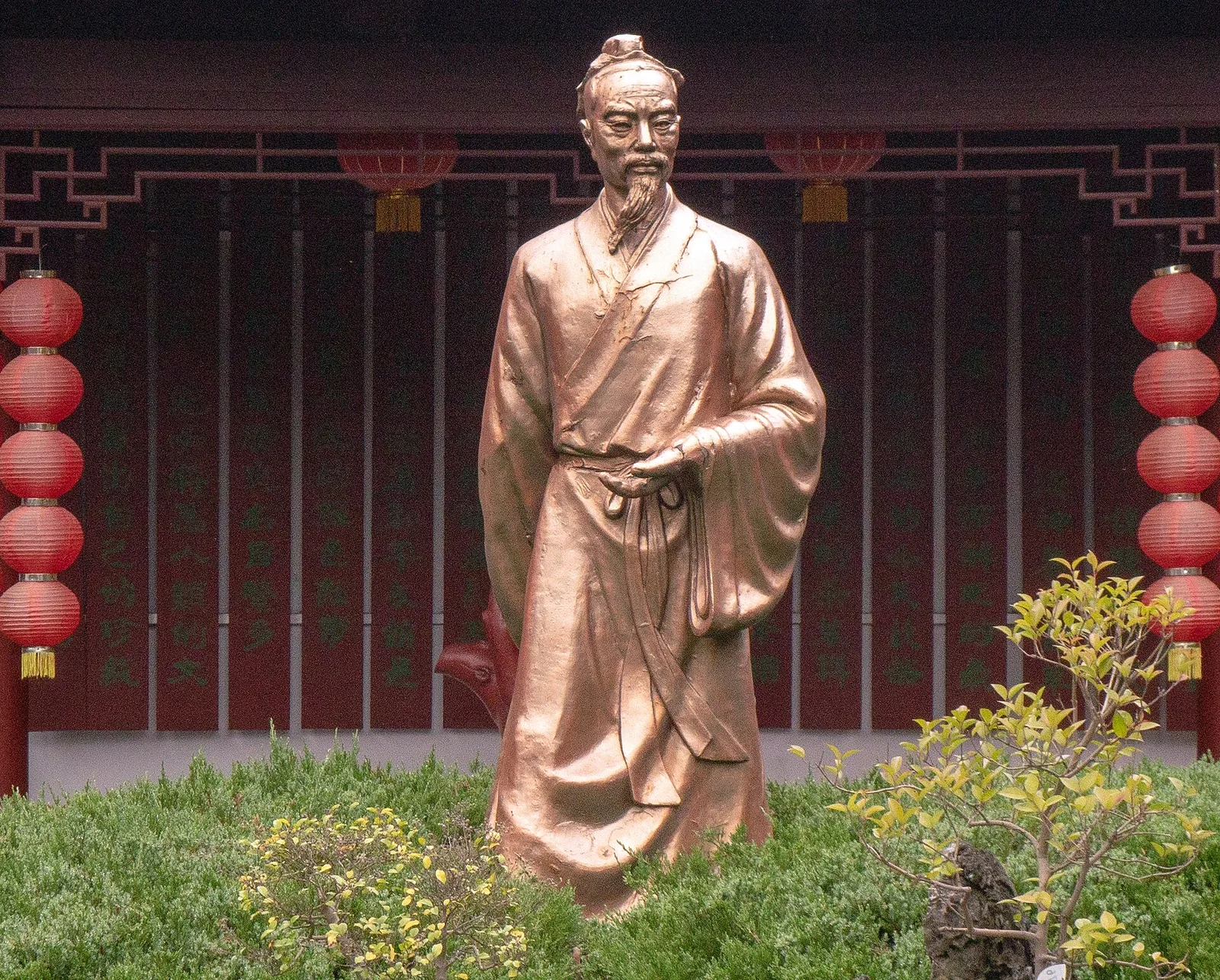
Photo: Wikimedia Commons · CC BY-SA 4.0

Thesis
Read through modern tea science, “神农《食经》“茶茗久服令人有力悦志”” is not a lab result but a set of variables: cultivar, soil, light and plucking standard.
Text
“Shennong’s Classic of Food says: ‘Long use of cha and ming makes a person strong and gladens the spirit.’”
Context
托名神农的《食经》认为,长期饮茶能使人有力气、心情愉悦。
Evidence
- Collation: "令人有力、悦志"各本一致;《食经》为托名古书,今已亡佚,赖《茶经》引文得存一鳞。
- Existing readings: 吴觉农评此条为茶"悦志"功效的最早记载:现代研究表明茶中咖啡因与茶氨酸协同,确有提神而安神之效——与"有力悦志"暗合。
Analysis
Modern tea science would split “神农《食经》“茶茗久服令人有力悦志”” into cultivar, soil, light and plucking variables. 吴觉农评此条为茶"悦志"功效的最早记载:现代研究表明茶中咖啡因与茶氨酸协同,确有提神而安神之效——与"有力悦志"暗合。 They remain testable, but only with their conditions attached.
Conclusion
The section does not give a universal rule. It demonstrates a method: read the text, the annotation and the Tang context together before making a modern claim.
Source: The Classic of Tea, Chapter VII · The History, section 2; the original is in the public domain.
Experience should be explained, not mystified.