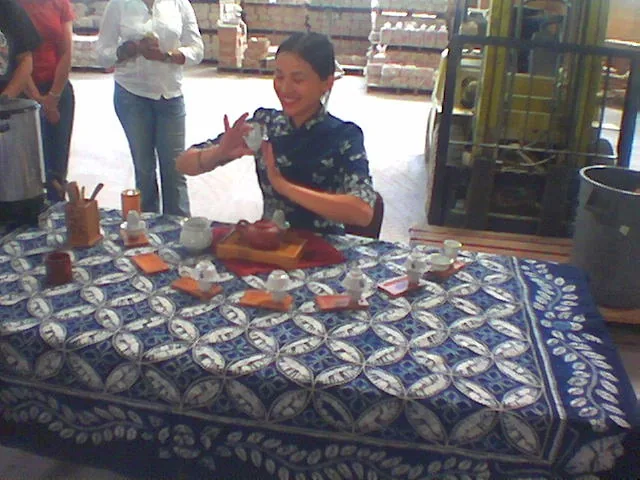
Photo: Wikimedia Commons · CC BY 2.0

Thesis
Section 8 is not really about “夫珍鲜馥烈者其碗数三次之者碗数五若座客数至五”; it is about how Lu Yu turns tea from a local product into an object of argument.
Text
“For tea of rare freshness and rich fragrance, pour but three bowls; for that of the second grade, five. With five guests, serve three bowls; with seven, five. With fewer than six, no fixed count is kept — but omit one, and let the finest essence make up his portion.”
Context
珍鲜馥烈:珍贵鲜爽、香气馥郁的好茶。行三碗/五碗:分三碗/五碗。阙一人:少算一人。隽永:头汤精华。
Evidence
- Collation: 此句讲分茶之道,各本一致。吴觉农注:"行三碗行五碗"是按人数分茶的唐代礼数。
- Existing readings: 吴觉农指出唐代分茶"三碗五碗"非拘于量,而在"淡者自得,浓者共赏"——好茶量少而精,次茶量多而匀,是"以茶会友"的雅量,也是分茶礼仪的雏形。
Analysis
Formally, the section gives a judgment, adds material detail, then returns to human practice. 珍鲜馥烈:珍贵鲜爽、香气馥郁的好茶。行三碗/五碗:分三碗/五碗。阙一人:少算一人。隽永:头汤精华。 That is why the Classic of Tea reads as an argued book rather than a miscellany.
Conclusion
The section does not give a universal rule. It demonstrates a method: read the text, the annotation and the Tang context together before making a modern claim.
Source: The Classic of Tea, Chapter VI · The Drinking, section 8; the original is in the public domain.
Get the character right before the taste.