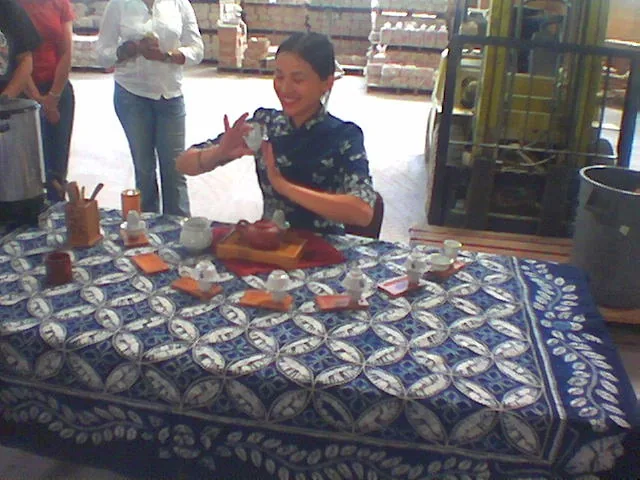
Photo: Wikimedia Commons · CC BY 2.0

Thesis
The key words in “凡艺茶者或至数百丛其树如瓜芦叶如栀子花如白蔷” are not ornament. They mark where Tang tea names, vessels and provenance meet.
Text
“Those who cultivate tea may grow several hundred clumps; the tree like gualu, leaves like gardenia, flowers like white rose, fruit like palm.”
Context
艺茶:种植茶树。丛:丛生。此句重申茶树形态,与一之源呼应。
Evidence
- Collation: 此段部分复述一之源,各本一致,为《茶经》行文上的呼应。
- Existing readings: 吴觉农指出此句与一之源"其树如瓜芦"相呼应,是陆羽借六之饮再次强调茶树辨认之法——古人辨识茶树,先观其形。
Analysis
The annotation matters less as philology than as a distinction between name and thing. 此段部分复述一之源,各本一致,为《茶经》行文上的呼应。 Once names settle, picking, grading and trade can share a language.
Conclusion
The section does not give a universal rule. It demonstrates a method: read the text, the annotation and the Tang context together before making a modern claim.
Source: The Classic of Tea, Chapter VI · The Drinking, section 5; the original is in the public domain.
Ask what period this person lived in.