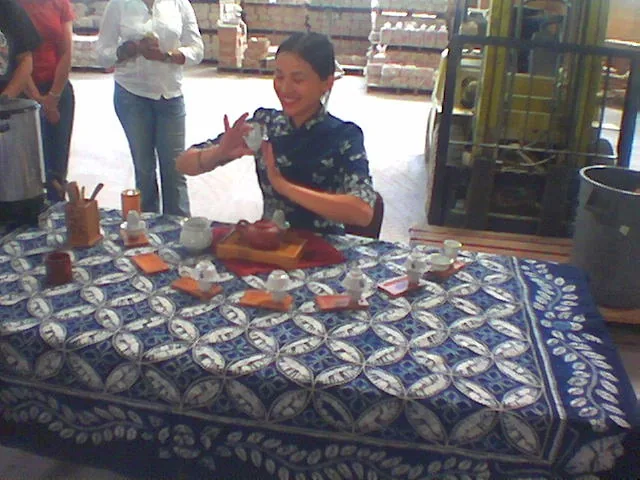
Photo: Wikimedia Commons · CC BY 2.0

Thesis
Read through modern tea science, “或用葱姜枣橘皮茱萸薄荷之等煮之百沸或扬令滑或” is not a lab result but a set of variables: cultivar, soil, light and plucking standard.
Text
“Some add scallion, ginger, jujube, tangerine peel, cornel, and mint, boiling it a hundred times, or stirring it slippery, or skimming off the froth. This is nothing but ditchwater — yet the custom persists.”
Context
唐代流行往茶里加葱姜枣等煮饮,陆羽对此很不以为然,说那简直是沟渠里的弃水。
Evidence
- Collation: “茱萸"或作"茱萸子”,各本有详略之异;“煮之百沸"四库本作"煮之百沸”,为夸张修辞,各本一致。
- Existing readings: 吴觉农评此句为陆羽最尖锐的批评:唐代"痷茶"(加料煮饮)是主流,陆羽力主清饮,其"沟渠弃水"之讥实为茶道清流派的宣言——今日纯茶清饮正由此开。
Analysis
Modern tea science would split “或用葱姜枣橘皮茱萸薄荷之等煮之百沸或扬令滑或” into cultivar, soil, light and plucking variables. 吴觉农评此句为陆羽最尖锐的批评:唐代"痷茶"(加料煮饮)是主流,陆羽力主清饮,其"沟渠弃水"之讥实为茶道清流派的宣言——今日纯茶清饮正由此开。 They remain testable, but only with their conditions attached.
Conclusion
The section does not give a universal rule. It demonstrates a method: read the text, the annotation and the Tang context together before making a modern claim.
Source: The Classic of Tea, Chapter VI · The Drinking, section 3; the original is in the public domain.
Experience should be explained, not mystified.