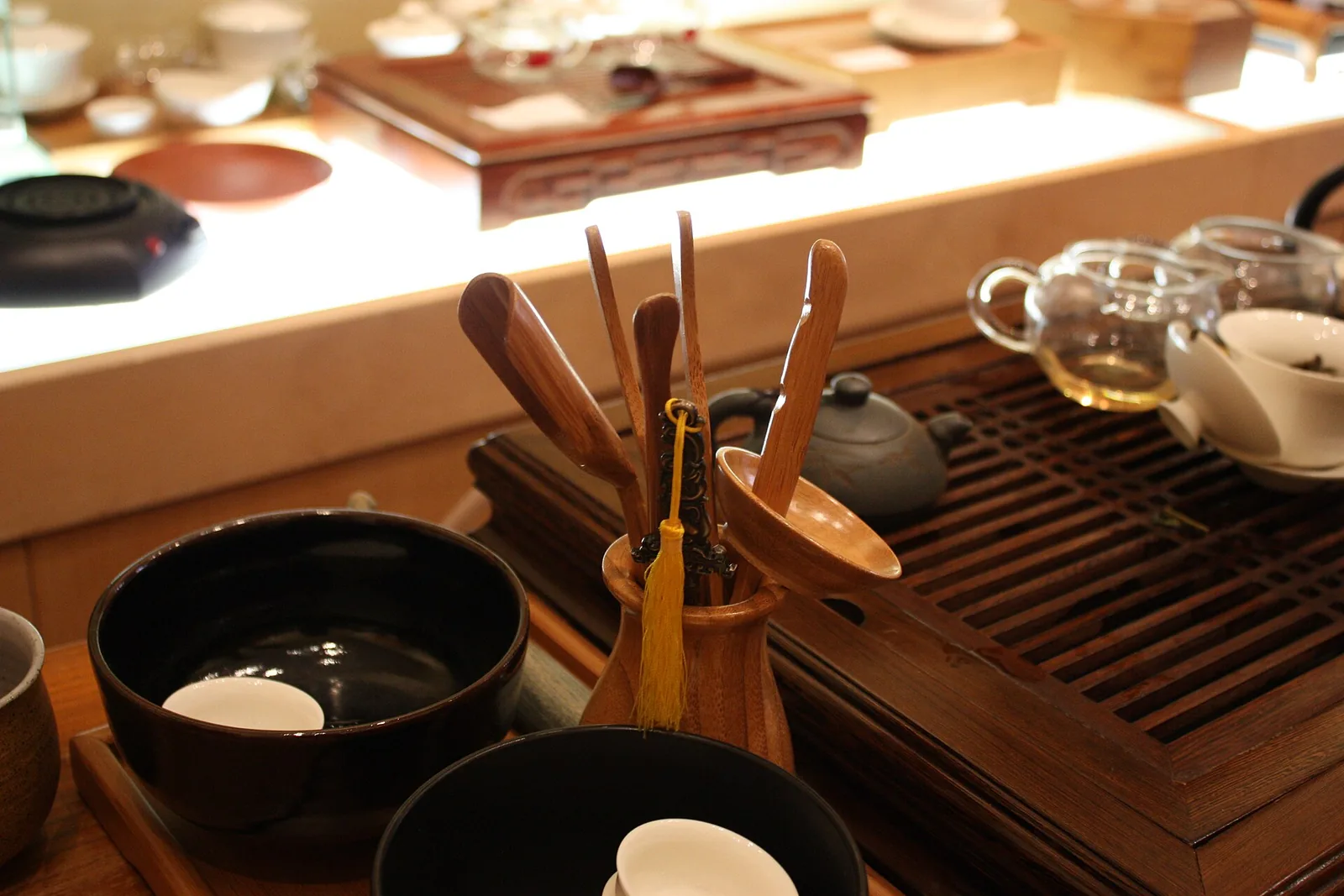
Photo: Wikimedia Commons · CC BY 2.0

Thesis
“焙凿地深二尺阔二尺五寸长一丈上作短墙高二尺泥” still has operational value at a contemporary tea table, provided Tang conditions are not silently universalised.
Text
“The bei drying-pit is dug two feet deep, two and a half feet wide, and one zhang long. Above it a low wall two feet high is built and plastered with clay.”
Context
焙:焙茶的地炉。挖地深二尺、宽二尺五寸、长一丈,上砌二尺高的矮墙,用泥抹平。
Evidence
- Collation: 各本一致。吴觉农注:焙为地炉式烘干设施,与今云南烤茶、武夷炭焙异曲同工。
- Existing readings: 吴觉农指出唐代"焙"是炭火地炉,用于初焙茶饼;"凿地深二尺"保温聚热,是古代"焙茶房"的雏形,后世烘青、焙火皆源于此。
Analysis
To repeat this section today is not to copy a Tang utensil list. It is to keep its order of judgment: leaf first, then water and fire, then the table.
Conclusion
The section does not give a universal rule. It demonstrates a method: read the text, the annotation and the Tang context together before making a modern claim.
Source: The Classic of Tea, Chapter II · The Implements, section 8; the original is in the public domain.
Tea is grown and made, not just discussed.