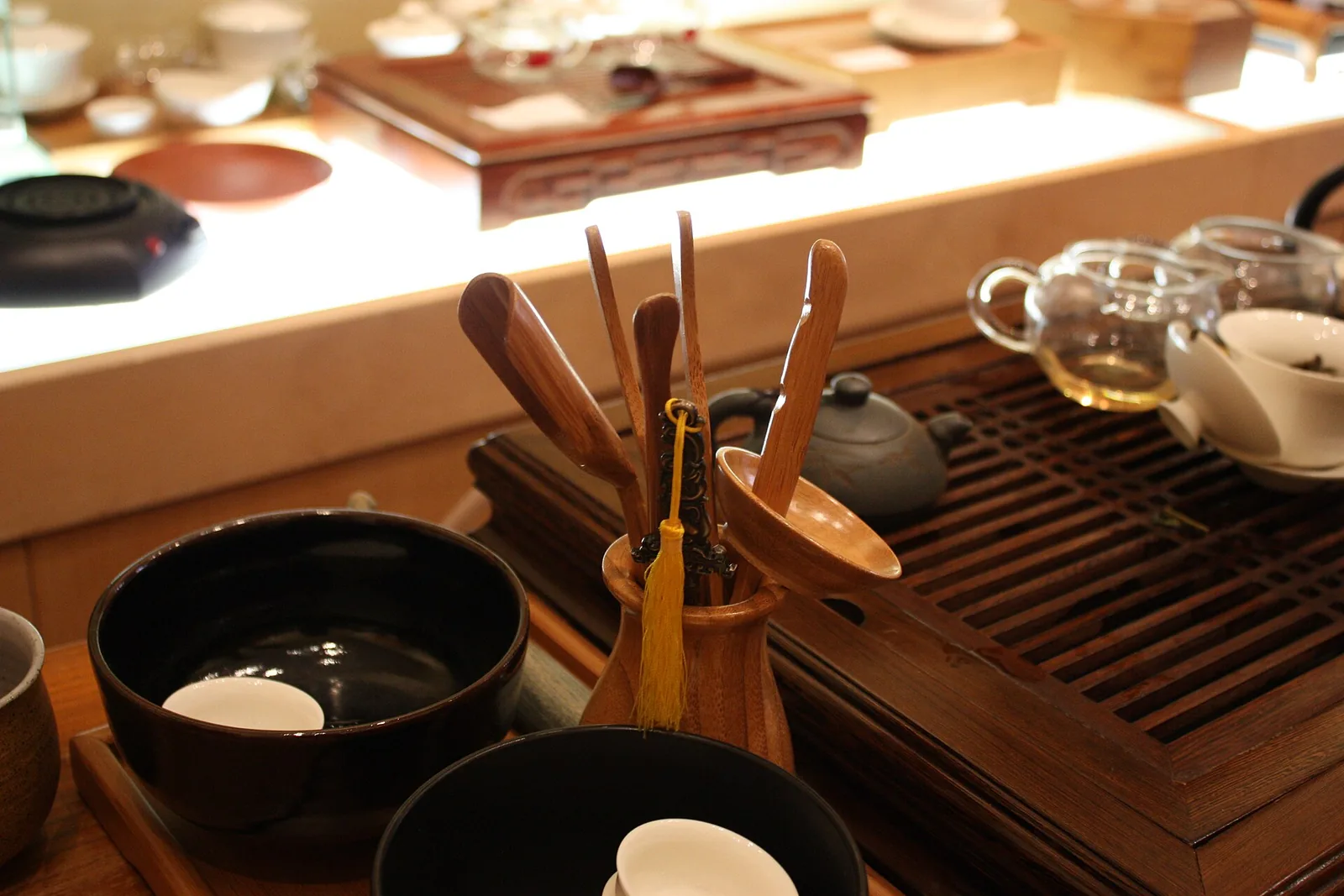
Photo: Wikimedia Commons · CC BY 2.0

Thesis
“杵臼一曰碓惟恒用者佳” still has operational value at a contemporary tea table, provided Tang conditions are not silently universalised.
Text
“The pestle and mortar, also called dui, are best when they have long been in constant use.”
Context
杵臼(chǔ jiù):捣茶用的杵和臼。碓(duì):春米用的工具。恒用者:经常使用的。
Evidence
- Collation: "惟恒用者佳"各本一致。吴觉农注:常用的杵臼表面磨光、不伤茶膏,新者糙涩——古人对工具的"养"深有心得。
- Existing readings: 吴觉农指出:唐代饼茶需将蒸青叶捣烂成膏,杵臼即为此而设;"恒用者佳"说明器物经年使用后表面光滑顺手,暗合今日茶人"养器"之说。
Analysis
To repeat this section today is not to copy a Tang utensil list. It is to keep its order of judgment: leaf first, then water and fire, then the table.
Conclusion
The section does not give a universal rule. It demonstrates a method: read the text, the annotation and the Tang context together before making a modern claim.
Source: The Classic of Tea, Chapter II · The Implements, section 4; the original is in the public domain.
Tea is grown and made, not just discussed.