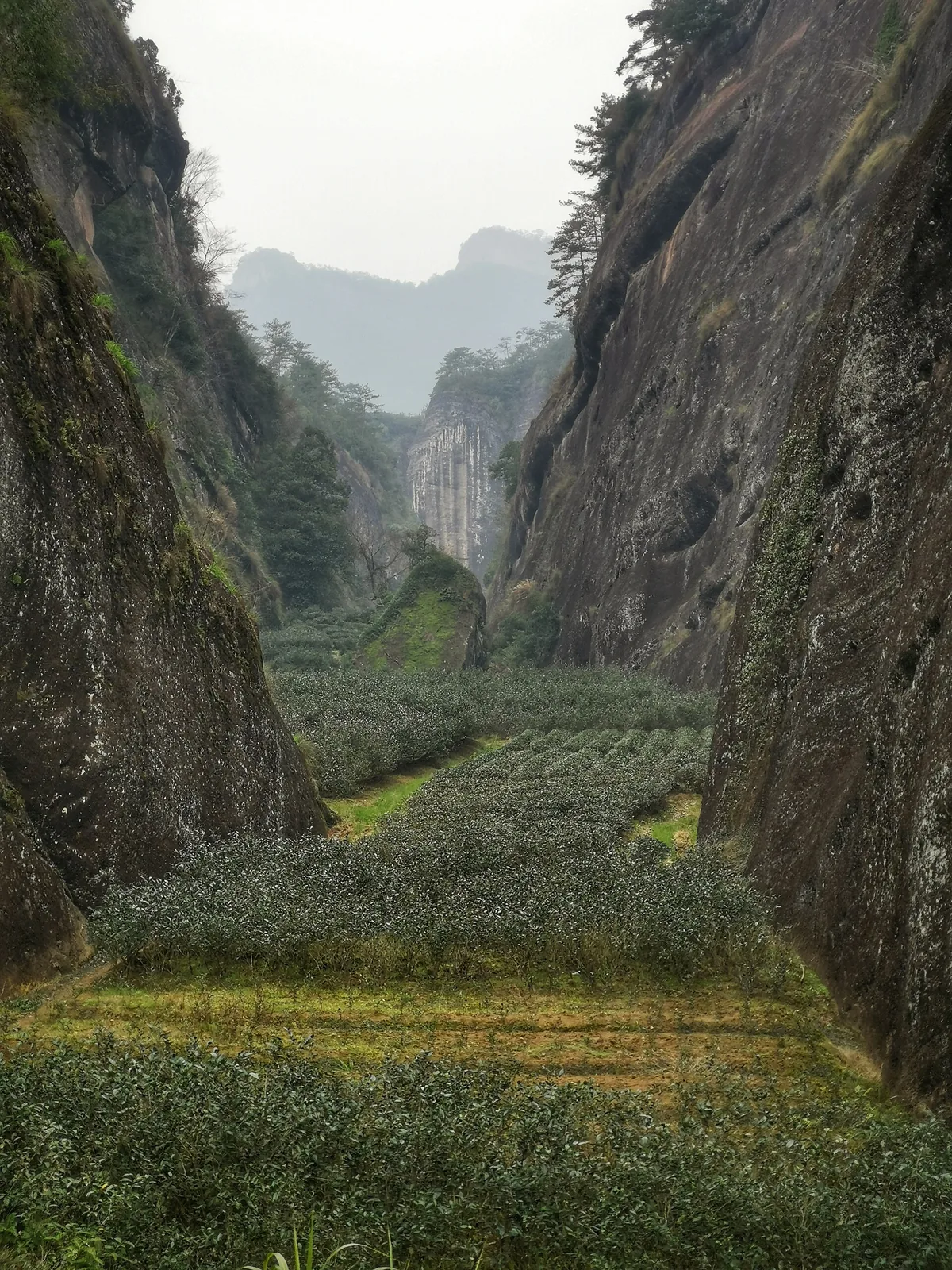
Photo: Wikimedia Commons · CC BY-SA 4.0

Thesis
Section 8 is not really about “岭南生福州建州韶州象州往往得之其味极佳”; it is about how Lu Yu turns tea from a local product into an object of argument.
Text
“In Lingnan, teas of Fuzhou, Jianzhou, Shaozhou, and Xiangzhou are occasionally obtained, and their flavor is excellent.”
Context
岭南道:今广东、广西一带。福州、建州、韶州、象州所产茶偶尔得到,味道极佳。
Evidence
- Collation: 此句与江南道所载之地名有重叠,各本如此,为《茶经》行文上的一种复述;吴觉农校注认为系唐代州郡隶属变动所致。
- Existing readings: 吴觉农指出岭南道即今两广,陆羽以"味极佳"点赞——今日英德红茶、凤凰单丛等岭南名茶,皆在这一片赞誉之地。
Analysis
Formally, the section gives a judgment, adds material detail, then returns to human practice. 岭南道:今广东、广西一带。福州、建州、韶州、象州所产茶偶尔得到,味道极佳。 That is why the Classic of Tea reads as an argued book rather than a miscellany.
Conclusion
The section does not give a universal rule. It demonstrates a method: read the text, the annotation and the Tang context together before making a modern claim.
Source: The Classic of Tea, Chapter VIII · The Producing Regions, section 8; the original is in the public domain.
Get the character right before the taste.