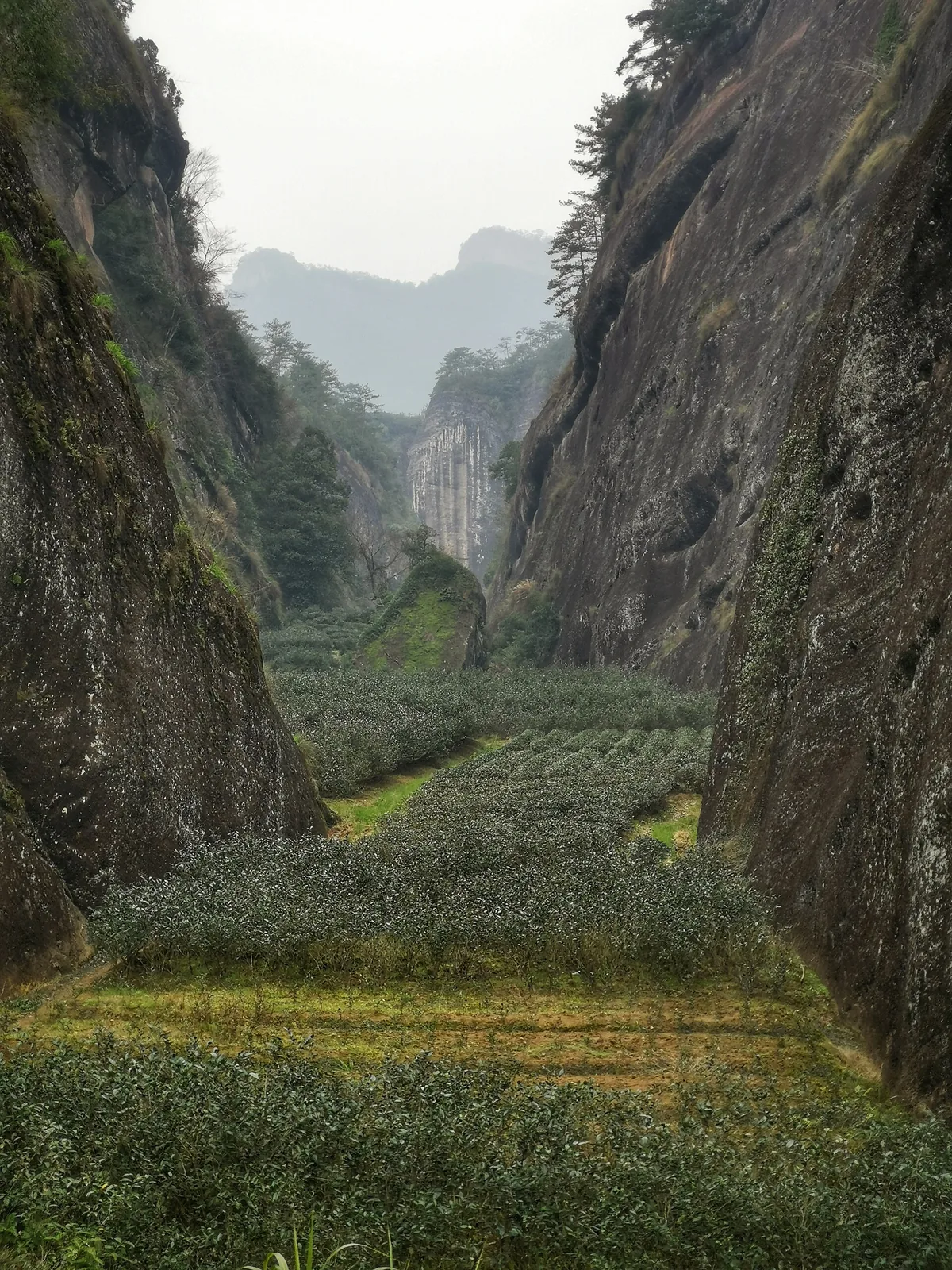
Photo: Wikimedia Commons · CC BY-SA 4.0

Thesis
The common mistake is to lift “江南生鄂州袁州吉州其味辛生福州建州韶州象州其” out of its sentence and turn it into an absolute rule.
Text
“In Jiangnan, teas of Ezhou, Yuanzhou, and Jizhou are pungent in taste; those of Fuzhou, Jianzhou, Shaozhou, and Xiangzhou are excellent.”
Context
江南道:今长江以南广大地区。鄂州(武昌)、袁州(宜春)、吉州(吉安)茶味辛辣;福州、建州(建瓯)、韶州、象州茶味极佳。
Evidence
- Collation: 各本一致。建州即今福建建瓯,唐代列"味极佳",宋代更成贡茶中心——陆羽的评价极有远见。
- Existing readings: 吴觉农特别指出建州(闽北)"味极佳"的预见:宋代北苑贡茶、明清武夷岩茶皆出于此——陆羽是史上第一个为福建茶写下好评的人。
Analysis
The usual misreading extracts “江南生鄂州袁州吉州其味辛生福州建州韶州象州其” as a slogan. 各本一致。建州即今福建建瓯,唐代列"味极佳",宋代更成贡茶中心——陆羽的评价极有远见。 In fact every judgment in the chapter carries a limit of place, season and use.
Conclusion
The section does not give a universal rule. It demonstrates a method: read the text, the annotation and the Tang context together before making a modern claim.
Source: The Classic of Tea, Chapter VIII · The Producing Regions, section 7; the original is in the public domain.
When lost, brew a cup first.